
Collection Facts
Historical Context
The Erie Canal was part of the New York State Canal System, which connected the Great Lakes basin to New York City by opening up new trade routes. By providing cheaper and more efficient means to transport goods, the canal had a substantial and enduring impact on the economic development of New York State, as well as the United States as a whole. The canal’s construction began in 1817 and officially opened for travel in 1825. With stops along many parts of New York State, trade and travel grew and the state prospered. A large number of laborers, many of whom were immigrants, worked to construct the Erie Canal.
Scope of Collection
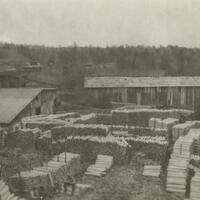
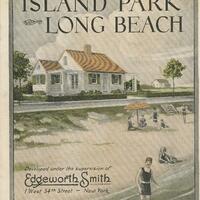
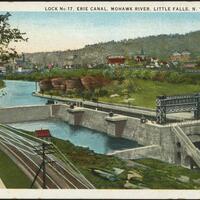
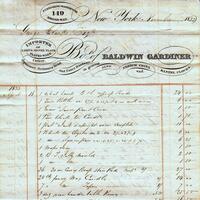
The “Working on the Erie Canal” collection provides insight into the lives of those who worked on the Erie Canal from the 1820s to the 1930s, from the early days of canal enlargement to the industrial age of the Barge Canal. Through photographs, receipts, contracts, and other ephemera, this collection provides insight into the operation of the Erie Canal as workers faced winter weather, advances in boat construction, competition from other modes of transportation, among other obstacles. From the surveyors and construction workers who built the canal to the lock operators and administrators who managed the canal's operations, this collection depicts the Erie Canal and its workers as agents of progress and transformation.
Browse within this collection
Browse similar collections

Collection Facts
Historical Context
The Woodstock Byrdcliffe Guild provides a vibrant center for excellence in the arts and crafts in the beautiful and unique rural community of Woodstock, New York, while preserving the historic and natural environment of one of the earliest utopian art colonies in America. It offers an inspiring combination of residency, educational, exhibition, and performance programs that encourage creative collaboration among artists, students, arts professionals, and the public.
Scope of Collection
This collection contains selections from the Woodstock Byrdcliffe Guild collections, including drawings, woodcuts, ceramics and photographs. These works were created at the Byrdcliffe Art Colony, founded in 1902 by Ralph Radcliffe Whitehead, Bolton Coit Brown, and Hervey White.
Address:
34 Tinker Street
Woodstock, NY 12498
Phone: 845-679-2079
Browse within this collection
Browse similar collections

Collection Facts
Historical Context
Since its founding in 1919, the Woodstock Artists Association & Museum (WAAM) has been committed to exhibiting, collecting and supporting artists and art education and in sustaining the tradition of Woodstock as a “Colony of the Arts.” Located in the center of the village of Woodstock, New York, the WAAM functions as a cultural center as well as a repository for the work of American artists associated with the Art Colony. Each year, the WAAM presents a full schedule of group, solo and historic exhibitions of regional artists throughout its five spacious galleries.
Scope of Collection
This collection includes selected paintings from the WAAM collection, featuring the work of important American artists who have lived and created in the Woodstock region.
Address:
28 Tinker Street
Woodstock, NY 12498
Phone: 845-679-2940
Browse within this collection
Browse similar collections

Collection Facts
Historical Context
Women’s Studio Workshop envisions a society where women’s visual art is integral to the cultural mainstream and permanently recorded in history. Our mission is to operate and maintain an artists’ workspace that encourages the voice and vision of individual women artists, provides professional opportunities for artists at various stages of their careers, and promotes programs designed to stimulate public involvement, awareness, and support for the visual arts. WSW maintains facilities for etching, letterpress, papermaking, book arts, silkscreen, 3D work, ceramics, and photography. Our studios are housed in an historic building, located in the foothills of the Hudson Valley’s Shawangunk Mountains.
Scope of Collection
This collection includes materials drawn from Women's Studio Workshop extensive collections. It includes drawings, etchings, mixed media works, photographs, and artist's books.
Address:
P.O. Box 489
Rosendale, NY 12472
Phone: 845-658-9133
Browse within this collection
Browse similar collections

Collection Facts
Historical Context
The first Women’s Rights Convention was held in Seneca Falls in 1848, putting into motion the efforts of women’s rights leaders to achieve equality for women in our nation. Among the many people leading these efforts were Elizabeth Cady Stanton, Susan B. Anthony, Frederick Douglass, Amelia Bloomer, Jane Hunt, and Lucretia Mott. Seneca Falls continues to celebrate these achievements through many events throughout the year, and there are several memorials and museums honoring women's rights in Seneca Falls.
Scope of Collection
This collection includes portraits, photographs of celebrations, newspaper articles, correspondence, and information pertaining to women’s rights, nationally and locally.
Browse within this collection
Additional Information
Seneca Falls Historical Society
Browse similar collections

Collection Facts
Historical Context
Fayetteville Village is located in the town Manlius, which is an eastern suburb of Syracuse in Onondaga County. The village is named after the Marquis de Lafayette, who was considered a national hero in both the United States and France. New York State is home to a great deal of historical women, one of whom was a Fayetteville native: Matilda Jocelyn Gage (1826 - 1898). Gage played a key role in the women’s rights movement and was known for being a great writer. Her house used as a station of the Underground Railroad and has become a historic site where people can visit and learn more about Gage, other suffragists, and the Underground Railroad.
The Coterie, which is defined as “an intimate and often exclusive group of persons with a unifying common interest or purpose”, was a women’s study group in Fayetteville that broke off from a men’s and women’s Shakespeare Club. It was officially established on October 26th, 1885. The club is still around today, with approximately eighteen active members and twelve honorable members. The club’s goals involve providing the opportunity for friendship and intellectual growth for its members. The group meets once a month at various members’ homes and evening events which may include lectures, discussion of particular authors, or readings of plays by members.
Scope of Collection
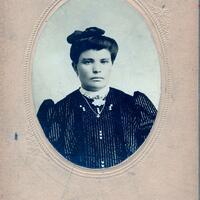
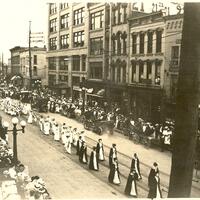
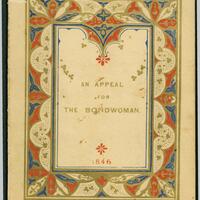
The Women of Fayetteville collection includes images of Fayetteville women and their activities dating back to the 19th century. The collection documents their association with social, civic and academic organizations and institutions. Of particular note are digitized documents from the archive of the Coterie, a women’s study group established in 1885 that continues to meet regularly to this day. A goal of the library’s overall digitization project is to expand this particular collection to pay tribute to the wide range of women whose drive and energy fueled the development of their community.
Browse within this collection
Browse similar collections

Collection Facts
Scope of Collection
This collection consists of four videos highlighting the different aspects of news coverage by WKBW-TV over the last 60 years.
The first video highlights the beginnings of WKBW. WKBW-TV began as an extension of the popular WKBW radio 1520AM, now WWKB. The station began under the direction and ownership of the late Dr. Clinton H. Churchill. In fact, the original building used to be a tabernacle, which is key to what WKBW stands for: "Well Known Bible Witness." WKBW-TV signed on and continues as one of the top ABC affiliates in the country.
On November 30, 1958, at: 1420 Main Street in Buffalo, New York - the original home of WKBW-TV, Rick Azar signed the station on with the words, "Ladies and Gentlemen, WKBW-TV Channel 7 is on-the-air!"
The second video highlights the contributions that women have made to the success of the station. The third video highlights the varied and colorful sports scene in Buffalo over those same years. Lastly is a video that puts the spotlight on the people of Western New York who make this area a wonderful and interesting place.
Browse within this collection
Browse similar collections

Collection Facts
Historical Context
During the period of the mid-1960s to the early 1990s, the eight counties of Western New York faced dramatic challenges to social norms, the economy, and politics. During the turbulent 1960’s, Buffalo along with other major U.S. cities experienced inner city riots, civil rights and anti-war protests, and white flight to the suburbs. The 1970s saw an inmate uprising at Attica that led to prison reform at a great cost to human life. Major environmental issues including the Love Canal neighborhood and the nuclear clean-up at West Valley attracted national attention. During the 1980s and early 1990s, Western New York struggled with a loss of major industries including Bethlehem Steel, and became a one newspaper city with the shutdown of the Buffalo Courier Express. Despite social, economic, and political upheavals, Western New York’s unique religious and ethnically diverse culture provided a tightly-knitted fabric of tradition that helped stabilize families and neighborhoods. As the “City of Good Neighbors,” Buffalo celebrated its storied history and found new ways to cope with a rapidly changing world. While Buffalo is now experiencing an economic renaissance, many of the issues that confronted the Western New York region and the state of New York a half century ago continue to present challenges. These include matters involving race relations, civil rights, preservation, education and the environment. It is the hope of the Buffalo Broadcasters Association that this up-close and personal television news chronicle of Western New York’s moving image history will shed new light on the character of a region and its people, and provide valuable lessons for addressing the critical issues of our time.
Scope of Collection
This WIVB-TV collection of news film and videotape covers many aspects of life in the greater Buffalo region during the time period primarily spanning from the mid-1960s to the early 1990s. As the collection expands, it will chronicle the growth of grass roots movements that led to major institutional changes. It will also present human interest features that bring out the humanity of a people. In the WIVB-TV 50th Anniversary Special, “First In Western New York: 50 Golden Years on Channel 4”, there are brief clips from the beginnings of broadcast television in Buffalo. These segments date back as early as 1948. The news film and videotape digitized in this collection represent only a small portion of the Buffalo Broadcasters Association (BBA) holdings. There are log books listing the contents of each broadcast and research conducted by many journalists. It is hoped that one day all of the materials in the BBA Archive will be available to researchers and the public.
Browse within this collection
Browse similar collections

Collection Facts
Historical Context
Winston C. Perry, Jr. is the Village Historian of Upper Nyack and the President of the Historical Society of the Nyacks. He has advanced the study of Local History in numerous roles in Nyack and Rockland County. In March 2009, a Lifetime Service Award was bestowed upon him by the Historical Society of Rockland County. Mr. Perry traces his family history back to the early days of New Netherland and in Nyack to 1676.
Scope of Collection
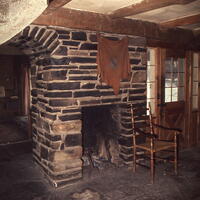
This collection consists of photographs and ephemera either donated or lent to the Nyack Library by Winston C. Perry, Jr. It includes images of local landscapes, architecture, people, and events.
Browse within this collection
Browse similar collections

Collection Facts
Scope of Collection
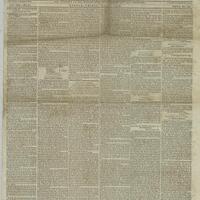
This collection consists of the Willsborough Town Book, beginning on the 10th day of May 1765.