
Collection Facts
Scope of Collection
This collection includes documents relating to Frederick Willie and his service in the Civil War.
Browse within this collection
Browse similar collections

Collection Facts
Historical Context
William Thompson Howell, born in Newburgh, NY in 1873, was an avid hiker and photojournalist. He used his photography to sway political opinion toward environmental issues including the reforestation and preservation of the NY Highlands. In the late 1900s and 1910s, Howell spent a great deal of time hiking the area that is now Harriman and Bear Mountain State Parks, photographing the countryside and working with the Palisades Interstate Park Commission (PIPC) and others as they pushed for the creation of public parks across the region. His photographs can be found in multiple collections in the northeast, but the PIPC collection is among the largest.
Scope of Collection
This collection contains glass plate negatives taken during the time Howell spent in the Highlands. In total, there are approximately 400 scanned negatives in the collection.
Browse within this collection
Browse similar collections

Collection Facts
Historical Context
Originally founded as two separate colleges – Hobart College in 1822 and William Smith College in 1908 – Hobart and William Smith Colleges enjoy a rich and unique history that spans nearly 200 years on Seneca Lake.
Scope of Collection
This collection includes the biography of the founder of William Smith College, Mr. William Smith of Geneva, NY.
Browse within this collection
Browse similar collections

Collection Facts
Historical Context
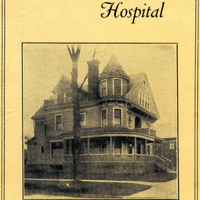
Willard Asylum for the Insane was named after Dr. Sylvester Willard (1825-1865) Secretary of the State Medical Society, who was appointed to investigate the living conditions of the chronic and pauper insane residing in the poor houses in New York and following an Act passed April 20, 1864. In January 1865, Dr. Willard presented his report. On April 8, 1865 a law passed to create an asylum for persons with chronic mental conditions and pauper insane named Willard Asylum in memory of Dr. Willard who passed away days before the law was passed. The Willard Asylum for the Insane opened in 1869. In 1890, it became the Willard State Hospital, and in 1974 the Willard Psychiatric Center, until closing in 1995.
Scope of Collection
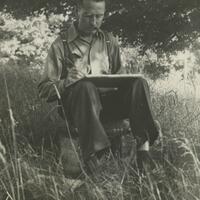
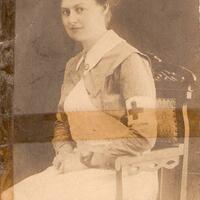
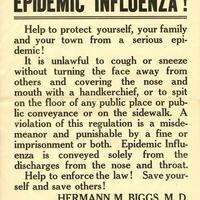
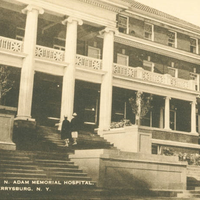
The Willard Psychiatric Center Collection includes black and white photographs taken during the mid-twentieth century of various buildings located on the grounds of the former Willard Psychiatric Center. The sixty-one images were created by an unknown photographer and donated by a private collector in 2016.
The collection also contains a two-volume scrapbook organized by former Willard Physician Dr. Horace G. Hopkins (1843-1918) and his wife, Anne Maycock Hopkins (1847-1919). Additionally, the collection includes postcards, employee newsletters New Directions, and various annual reports.
Browse within this collection
Additional Information
<p>Edith B. Ford Memorial Library</p>
Browse similar collections

Collection Facts
Historical Context
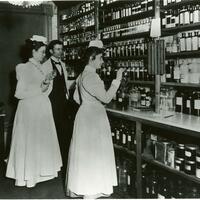
Dr. Horace G. Hopkins (1843 - 1918) was a physician and surgeon at Willard Asylum for the Insane. He was born in Williamsville, Erie County, New York. He enlisted at Buffalo as a Private in the Union Army on September 30, 1862 in the 27th NY Light Artillery. He was promoted to Corporal in 1862, and then to 2nd Lt., NY 2nd Artillery. He was honorably discharged in January 1865. Horace Hopkins began medical studies at the University of Buffalo in 1869 and graduated in 1872. In 1874 he joined the staff of Willard Asylum and remained until 1894. Anne Maycock Hopkins (1847-1919) married Dr. Horace G. Hopkins in March 1884. Both were active in the local Presbyterian Church as well as participants in numerous plays and performances produced at the asylum. The two-volume scrapbook was originally owned and compiled by Dr. and Mrs. Horace G. Hopkins, and many of the photographs are believed to have been taken by Horace, or his brother Nelson S. Hopkins. The United States Federal Census of 1870, lists Horace as "photographer.". Following his tenure at Willard Asylum, Dr. Hopkins returned to Buffalo and operated a private practice until his death in 1918. Both Horace and Anne are buried in Ovid Union Cemetery next to their infant daughter who died on October 15, 1886. The collection of two scrapbooks were donated by Dr. Robert E. Doran, Jr. (1899-1983) to the Edith B. Ford Memorial Library. Dr. Robert E. Doran, Sr. was First Assistant Physician at Willard State Hospital, and his son spent a great deal of his childhood at Willard. Dr. Doran, Jr. returned to Willard State Hospital in 1934, as a consulting surgeon.
Scope of Collection
This collection includes two scrapbooks. Scrapbook A mostly includes newspaper clippings with some images; Scrapbook B mostly includes images with a few newspaper clippings.
Browse within this collection
Additional Information
Edith B. Ford Memorial Library
Browse similar collections

Collection Facts
Historical Context
A number of schools have served students of Whitesboro since the area was settled in the late nineteenth century. The first known schoolhouse in Whitesboro was a log structure built in 1785 near where the Whitesboro Town Hall now stands. A later brick schoolhouse stood near the former engine house on Mosely Street. The Whitestown (Whitesboro) Academy was a private school, founded in 1813 and was supported by private fees.
In 1827, the Oneida Institute aka the Oneida Academy was established and renamed the Whitestown Seminary in 1844. It was the first school in the country to admit African American students and was run for a time by the abolitionist, Beriah Green.
In 1858, a two story wooden building, formally incorporated as the Union Free School District of Whitesboro but known as the "Old Green School" to residents, was erected and it served as a school for 69 years. In 1919, the Main Street School was erected on the site of the "Old Green" school and served both elementary and high school students. It later became the grade school for kindergarten through sixth grade. This building survives today as apartments.
With an increase in population, a new high school was needed and the Whitesboro Central High School was erected on Oriskany Boulevard between 1936 and 1938. It currently serves as the Whitesboro Junior High today. The first Che Ga Quat Ka yearbook was issued in 1936.
On May 11, 1936, the school district became centralized and first known as the Whitesboro Central School District. The Whitesboro Central School District was reorganized in 1966 with the opening of the Marcy Senior High School in 1967. It serves as the Whitesboro Senior High School today for students in grades 9 - 12.
Scope of Collection
This collection contains yearbooks and alumni publications from the Whitesboro Central School District, including the "Che-Ga-Quat-Ka" high school yearbooks and "Wariors" junior high school yearbooks.
Browse similar collections

Collection Facts
Historical Context
George Westinghouse Sr. was born in Pownal, VT in 1809. As an adult, he moved to Central Bridge, NY and established a business that manufactured agricultural machinery. In the mid 1850s, he moved to Schenectady, NY with his wife, Emeline and their children. In Schenectady, he also owned a factory manufacturing agricultural machinery. He and his wife had eight children including sons, Albert, and George Jr. After retiring, George moved to Pittsburgh, PA and died in 1884.
Albert Westinghouse was born circa 1843. On August 15, 1862, he enlisted in the US Army as a private. He served in the I Company of the New York 6th Cavalry and was discharged on September 7, 1863. Shortly after, he enlisted again as a 2nd Lieutenant and he was commissioned into the B Company of New York 2nd Vets Cavalry. Albert was killed at McCloud Mills, MS on December 10, 1864.
George Westinghouse Jr. was the third son of George and Emeline. He was born in 1846. George spent a lot of time in his father’s shops and became interested in engineering. He served in the army during the Civil War in the New York National Guard, the 16th Regiment of the NY Cavalry and as an acting ensign in the United States Navy before attending Union College between 1865 and 1866. George is best known for inventing the railway air brake and as a pioneer of the electrical industry. He was one of Thomas Edison’s rivals and his electricity system using alternating current eventually prevailed over Edison’s system. George died in 1914.
Scope of Collection
The papers of the Westinghouse Family date from 1833-1913, with the bulk of the material falling between 1862 and 1880. The collection includes: correspondence; legal documents such as mortgages, warranty deeds, agreements, leases and patent information; photographs; drawings; a pocket diary and autograph book.
The bulk of the collection is family correspondence. The majority of these letters were written by Albert Westinghouse to his family while he was serving in the military during the Civil War.
The pocket diary belonged to Albert Westinghouse. The diary dates from January 30 until October 10, 1864. His entries are concise, writing about daily military life including mail from home, inspection, clothing, marches, new recruits, drilling, etc.
Browse within this collection
Browse similar collections

Collection Facts
Historical Context
Westhill High School is a suburban school located just west and adjacent to the City of Syracuse with approximately 580 students in grades 9-12. When the newly-constructed high school opened in September of 1961, it served students in grades 7-12 from Westvale in the Town of Geddes and Onondaga Hill in the Town of Onondaga. The first yearbook is the 1962 edition which coincides with the opening of the new school. Westhill High School’s mascot, the Warrior, changed from a Native American logo to a Spartan-style helmeted head in 2002.
Scope of Collection
This collection includes yearbooks from Westhill High School.
Browse similar collections


Collection Facts
Historical Context
This collection of over 300 images is derived from several atlases found in the Local History Collection at SUNY Fredonia's Reed Library. The atlases cover the following counties: Cattaraugus, Chautauqua, Genesee, and Wyoming for the time period 1866-1881. The atlases, produced by S.N. and D.G. Beers and Assistants (known as "Beers Atlases") include a wide range of information about the demographic and geographic features of the counties, their towns and villages, including travel distances between points, town histories, geographic landmarks, images of well-known citizens as well as images and locations of farms, mills, schools, businesses, religious establishments, private residences and more. This collection was digitized subsequent to the digitization of the earlier Holland Land Company Maps also held by Reed Library. When brought together, these two collections contextualize the rapid growth and expansion of communities, wealth, and infrastructure in Western New York, from the earliest European land settlements beginning in the 1790s through the post-Civil War industrialization that characterized the region in the late nineteenth century.
Scope of Collection
The Western New York County Atlases collection includes: maps of the region, town histories, census information, biographies of prominent citizens, illustrations of notable buildings and residences, as well as illustrated town and city scenes. The collection dates from the 1860s and early 1880s.
Browse within this collection
Browse similar collections

Collection Facts
Historical Context
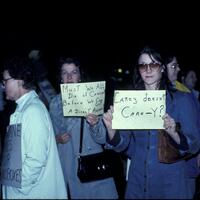
The village of Westbury is located in Nassau County, New York, as part of the Town of Hempstead and was established in 1932. Westbury has grown to have a diverse population throughout the late nineteenth to early twentieth centuries and is home to multiple well-known television and radio personalities, such as Howard Stern, and professional baseball players.
Scope of Collection
The Westbury Local History collection consists of still image photographs which tell the history of the Westbury area. A majority of the photographs share stories of the local fire department.
Browse within this collection
Additional Information
A larger collection of photographs than what has been digitized that tell the local history of the Westbury area.