
Collection Facts
Historical Context
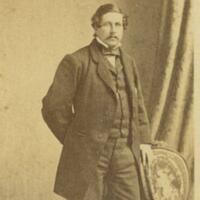
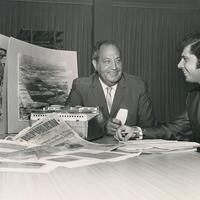
During the suburban boom that followed World War II, Shirley Long Island Inc., developed the middle-class community of Shirley on the South Shore of Brookhaven Town in Suffolk County. The company built 4,000 homes, many of them from prefabricated sections.Mr. Shirley's served as New York City's Commerce Commissioner in the early 1950's under Mayor Vincent R. Impellitteri. He died in 1963.
Scope of Collection
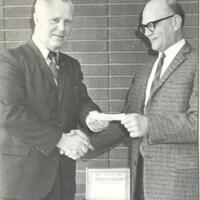
The collection consists of two series; Black and white photos of Walter T. Shirley with celebrities and community members, and meeting minutes, spanning from 1958–1964 of Shirley Long Island, Inc.
Browse within this collection
Browse similar collections

Collection Facts
Historical Context
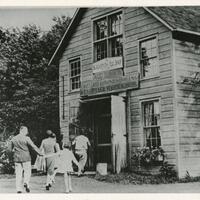
Walter "Walt" Whitman was an American poet, essayist, and journalist. A humanist, he was a part of the transition between transcendentalism and realism, incorporating both views in his works. Walt Whitman was born in 1819 in a farmhouse (now a part of the museum) built by his father in the town of Huntington, New York on Long Island.
Scope of Collection
The collection consists of black and white photographs of the birthplace of Walt Whitman taken by photographer Benjamin S. Conklin in the middle of the 20th Century. Additionally, there is a manuscript from Walt Whitman featuring a draft of his famous poem, Thick Sprinkled Bunting.
Browse within this collection
Browse similar collections

Collection Facts
Historical Context
William Seward (Will) Teator (1860-1930), known as Red Hook’s ‘Renaissance Man,’ was a self-taught naturalist, accomplished artist, scientifically-inclined farmer, and award-winning apple orchardist. Around 1900 he began taking images of his surroundings using dry plate photography. He was born on his father’s farm in the hamlet of Upper Red Hook and received his formal education at the Mountain View Academy of Upper Red Hook. After graduation he worked for a time as private secretary to General J. Watts de Peyster of Tivoli and then chose to apply his scientific skills to his apple orchard, developing new and improved varieties. He married Nevada (Nena) Myers and had two children, Roscoe and Marion, who appear in many of his photos.
Scope of Collection
Selected images of Upper Red Hook and surrounding areas by William Seward Teator, mostly photographed between 1898 and 1905. The images document local vistas, agricultural activities, buildings, neighbors and family groups. The collection consists of 287 original glass plate negatives as well as prints from the negatives (some images are digitally reversed). The collection was donated by Martha Hermans, a descendant of William Teator.
Browse within this collection
Browse similar collections

Collection Facts
Historical Context
Virginia “Ginger” Marshall Martus was born and raised in Port Washington, New York. She is the daughter of Raymond E. Marshall and Edith (Townsend) Marshall. Her father, Raymond E. Marshall (1898-1978), with his father, Albert Raymond Marshall (1868-1948), was the founder and owner of A & R Marshall, Inc., a marine service and supply business in Port Washington.
Scope of Collection
This collection contains photographs and documents surrounding the A & R Marshall, Inc., which was family-owned marine service and supply business in Port Washington.
Browse within this collection
Browse similar collections



Collection Facts
Historical Context
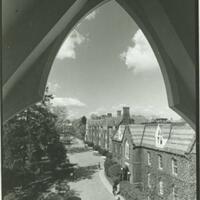
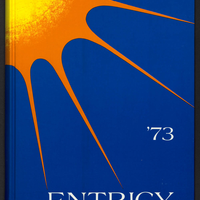
Born on April 22, 1912 in Clarksburg, West Virginia, Virgil C. Crisafulli spent his early years in Sicily and Wadsworth, Ohio. He graduated from Wadsworth High School in 1932. In 1938, he married Martha Eva Bair. Crisafulli earned his undergraduate, master's, and doctoral degrees from The Ohio State University. Before joining the U.S. Navy as a lieutenant during World War II, Crisafulli served as an economist with the Office of Price Administration and War Labor Board. During the war, he took part in several major combat operations while serving on the USS Ommaney Bay. Honorably discharged in 1946, Crisafulli joined the founding faculty at Utica College that same year. He worked at Utica College for 33 years as a professor of economics, retiring in 1978 as professor emeritus. During his tenure at Utica College, Crisafulli served on the Wage Stabilization Board during the Korean Conflict. From 1962 to 1964, he ran for Congress and served as Robert F. Kennedy’s Oneida County campaign coordinator. In 1967, Crisafulli served as a delegate to the New York State Constitutional Convention. Throughout his academic career and into retirement, Crisafulli actively continued teaching and researching. He authored several books, including A Directory of Business and Industry in the Upper Mohawk Valley, An Economic Analysis of the Rome-Utica Area, and a History of Utica College.
Scope of Collection
The Virgil Crisafulli Collection contains personal letters and correspondence involving Virgil and Martha Crisafulli, Utica College faculty, and family friends, as well as material relating to Virgil Crisafulli’s awards, distinctions, and other memorabilia surrounding his life and time as a UC faculty member. Included are personal letters between Virgil Crisafulli and his wife Martha Eva Bair, Martha and her sister Maddie Bair, and Martha and Pauline “Polly” Walsh (Sondergelt). Other figures mentioned in these letters include Eda Benton, Mrs. D. E. Whitehead, and Neil Chamberlain, as well as letters, documents, memorandums, pamphlets, programs, assorted notes, and official correspondence regarding Crisafulli’s time at Utica College. Related subjects include official appointment letters and letters of recommendation at UC, material related to UC’s Fiftieth Anniversary, a number of biographical materials detailing Crisafulli’s career, information regarding former UC faculty and staff, and the UC chapter of American Association of University Professors (AAUP). The collection also contains papers, letters, memorandums, pamphlets, photographs, programs, and other documentary material regarding the development, institution and advancement of Utica College’s Crisafulli Fund, Crisafulli’s career and involvement in statewide economic studies, and New York State’s Constitutional Conventions.
Browse within this collection
Browse similar collections

Collection Facts
Historical Context
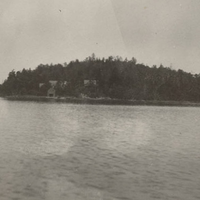
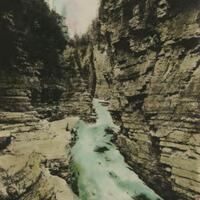
Violetta White Delafield (1875-1949) began to study botany in the 1890s and was for many years a member of the New York Botanical Garden. An accomplished amateur mycologist, Violetta published several technical papers on fungi, and created hundreds of annotated watercolors.
Scope of Collection
This collection represents a series of watercolor drawings Delafield made at Montgomery Place--an estate now owned by Bard--between 1922 and 1926.
Browse within this collection
Browse similar collections

Collection Facts
Historical Context
Vincent F. Seyfried (1918-2012) was a highly prolific historian of Long Island. His work between 1950 and 2010 includes eleven books on trolley systems in Queens and Long Island, twelve books on areas of Queens, a seven-volume set on the Long Island Rail Road, and a history of the founding of Garden City, where he was Village Historian from 1987 to 2006. He provided many entries on Queens history for The Encyclopedia of New York City (1995).
Scope of Collection
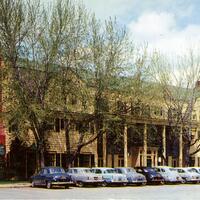
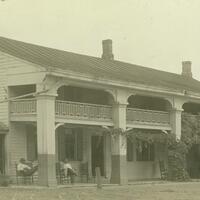
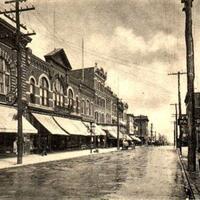
The collection contains historic postcards collected by Historian Vincent F. Seyfried. They depict various commercial buildings, places of worship, schools, hotels, military encampments, and recreational facilities from Long Island between the years 1898 to 1965.
Browse within this collection
Browse similar collections

Collection Facts
Historical Context
The Vincent Astor Collection tells the untold story of one of America's most prominent businessmen, philanthropists and a life-long friend of President Franklin D. Roosevelt. Roosevelt and Astor, both Dutchess County natives, were closely connected through family, social, and business ties but it was their work in defending America through two world wars that truly brought the old fishing buddies to new levels.
Ferncliff, the Astor estate in Rhinebeck is only a short drive from FDR's Hyde Park home of Springwood. At the Stanford White sporting pavilion of Astor Courts FDR would swim in Astor's indoor heated pool as part of his hydrotherapy treatments for polio. There is also evidence that Eleanor Roosevelt would make use of Astor Court's indoor shooting range and FDR would visit Vincent and his pet orangutan Freda for a relaxing break from his busy life.
While Astor and Roosevelt were lifelong friends, they were also both keenly interested in the defense of America. Throughout the 1930s Astor acted as an unofficial intelligence operative for Roosevelt and in the months preceding World War II, Astor would occupy the unique position of Area Controller of Intelligence for New York, a position created by FDR specifically for Vincent.
Scope of Collection
This collection includes historic photos, correspondence, and ephemera detailing FDR and Astor’s relationship in vivid detail. Within these papers friendly jokes and social plans exist side by side with intelligence reports and military matters of the gravest importance.
Browse within this collection
Browse similar collections


Collection Facts
Historical Context
Prior to incorporation, the Voorheesville area was a rural farming community. In 1863, the Albany and Susquehanna Railroad ran an excursion train from Albany to the rural hamlet, later the Delaware and Hudson Railway and Saratoga and Hudson River Railroad came to the hamlet, beginning what was to make Voorheesville a railroad town. The railroads brought not only tourists from Albany and elsewhere, it made the village more accessible as a suburban residence and created the opportunity for several industries to build factories in the village. The factories provided jobs to the local population and made the village attractive to other would-be workers. After a few years of discussion among village residents, The Village of Voorheesville was incorporated in 1899.
Industries included: a barrel-making factory, foundries including the Phoenix and Albany Malleable Iron Works, a canning factory, grain and feed mills, and others. Local orchards grew the apples needed for two cider and vinegar companies; a creamery and grist mill were available for local farmers; and local women sewed collars and shirts in their homes. Other businesses and institutions of community life followed including hotels; an Odd Fellows Lodge; churches; a fire department established in 1902; a library in 1915; Voorheesville Grange; a women’s study group called the Bay View Club; and a public school that eventually became the core of the Voorheesville Central School System.
The post-war years brought increased development and suburbanization to the village as roads were improved and more families could afford automobiles. Most of the industries in the village disappeared during these years. While trains still pass through the village several times per day, there is no longer a railroad depot.
In May 1999, the village celebrated its centennial with a parade and many other events over an entire weekend.
Scope of Collection
The collection includes records documenting the people, places, and events of the Village of Voorheesville and to a lesser extent the Town of New Scotland.
Browse within this collection
Additional Information
The library’s digital collection includes records documenting the people, places, and events of the Village of Voorheesville and to a lesser extent the Town of New Scotland.
Browse similar collections

Collection Facts
Historical Context
McGraw is a village in Cortland County, New York, United States. The village, first settled around 1806, is named after Samuel McGraw and is in the eastern part of the town of Cortlandville, east of the city of Cortland. The village was home to New-York Central College, McGrawville, an institution of higher learning founded by Free Baptists in 1849. The college was notable because about half of its students were African American. The college also employed at least two black professors. A smallpox epidemic, along with social and political opposition, brought about the college's closure in 1860. McGraw was incorporated as a village in 1869.
Scope of Collection
The Historic Society's collection consists of memorabilia, furniture, photographs, news articles, scrapbooks, photograph albums, post cards, books, and various items of interest dealing with the village and its residents both early and current.