

Collection Facts
Historical Context
Union College, located in Schenectady, New York, is a private liberal arts college. It was founded in 1795 and was originally an all-men’s college. In 1970, Union College became co-educational. The college offers a variety of undergraduate programs for its students and offers a substantial amount of extracurricular activities as well, including sports, clubs, fraternities and sororities for students to join. There have been a number of notable graduates from Union College, including many politicians during the nineteenth and twentieth centuries.
Scope of Collection
This collection contains postcards of the Union College campus and its vicinity, including postcards of student activities, individuals, and off-campus sites associated with prominent College alumni.
Browse within this collection
Browse similar collections

Collection Facts
Historical Context
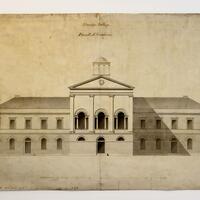
Union College, located in Schenectady, New York, is a private liberal arts college. It was founded in 1795 and was originally an all-men’s college. In 1970, Union College became co-educational. Schenectady is located outside of Albany. The city is known for its vast amount of historical architecture.
Scope of Collection
This collection contains postcards of the Union College campus and its vicinity,with a particular emphasis on scenes and buildings in the city of Schenectady.
Browse within this collection
Browse similar collections

Collection Facts
Historical Context
Union College, located in Schenectady, New York, is a private liberal arts college. It was founded in 1795 and was originally an all-men’s college. In 1970, Union College became co-educational. The college offers a variety of undergraduate programs for its students and offers a substantial amount of extracurricular activities as well, including sports, clubs, fraternities and sororities for students to join. One of the prominent faculty members was Warren Crosby Taylor, a Civil Engineering Professor, who wrote books regarding the topic of elementary surveying.
Scope of Collection
This collection contains black and white postcards of the Union College campus collected in the first half of the twentieth century by the daughter of Civil Engineering Professor Warren Crosby Taylor. They include a particularly rich representation of early campus fraternity houses.
Browse within this collection
Browse similar collections

Collection Facts
Scope of Collection
This collection comprises a series of unmailed Civil War-era patriotic envelopes or covers that was presented to Union College by John M. Pearson.
The patriotic covers featured in this collection primarily depict themes supporting the Northern or Union cause. This includes political cartoons and caricatures of patriotic symbols and political messages both for and against the Northern and Southern leaders of the time. The first patriotic covers appeared in 1861 as commercial printing houses seized the opportunity to publish and sell these novelties as commentary on both sides of the conflict. However, production was relatively short lived as the printing of Confederate covers dropped by 1863 while the Union covers lasted only one year longer.
For more information about the Civil War patriotic covers, see:
“Patriotic Envelopes of the Civil War: The Iconography of Union and Confederate Covers” by Steven R. Boyd
“Advertising envelopes constitute another aspect of nineteenth-century popular culture. Simply an ordinary envelope to which a printer added a design promoting a product or cause, advertising envelopes served a dual purpose: they carried an enclosed letter or other material through the United States mail, and the design work on the outside of the envelope promoted various products, services, or ideas.”
“First appearing in the spring of 1861, patriotic envelopes became another component of this middle-class material popular culture.”
“Union Civil War Patriotic Covers: An Overview” by Steven R. Boyd, Elaine Prange Turney and David W. Hansen from: “Journal of American Culture” Volume 21, Issue 3, pages 1–12, Fall 1998
“In particular, the Union Patriotic Covers and the images on them-which included flags, cannons, eagles, globes, soldiers, prominent figures, women, and a host of others-quite literally show us popular opinion on key issues in the North from the bombardment of Fort Sumter to the end of the War four years later.”
“A Civil War Patriotic envelope is simply an envelope or cover of any size or color on which a printer has imprinted a patriotic design.”
“The Handbook of Civil War Envelopes and Postal History, volume 1” by Robert W. Grant
“George Walcott Collection of Used Civil War Patriotic Covers” by Robert Laurence
“The catalog of Union Civil War patriotic covers” by William R. Weiss
Browse within this collection
Browse similar collections


Collection Facts
Historical Context
The demographic dispersion of Jews is generally described in three categories: Ashkenazi, Sephardi and Mizrahi. While Ashkenazi Jews make up the majority of world Jewry, the Feingold Postcard Collection focuses mainly on Jewish populations living in North Africa, which consisted of a combination of Sephardic and Mizrahi Jews. The term Sephardi designates the diaspora of Jewish people from Spain who migrated to Mediterranean regions, such as France and North Africa. Mizrahi Jews, on the other hand, originated in Persia and diverse locales in the Middle East and moved eastward. Mizrahi Jews were often seen as outsiders by both natives and other sects of Jews because they had dark skin, spoke different languages and had different customs.
Scope of Collection
This collection contains North African Postcards of Jewish women, children, and families dating back to the early 20th Century.
Browse within this collection
Browse similar collections


Collection Facts
Scope of Collection
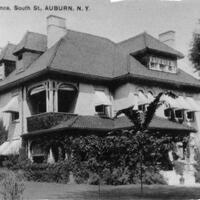
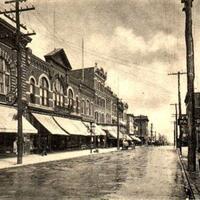
This collection includes historic postcards depicting various street scenes, landscapes, and architecture across Ulster County.
Browse within this collection
Browse similar collections

Collection Facts
Scope of Collection
This collection contains several issues of the Ulster County Gazette. This newsletter was published by the Ulster County Historical Society, and included news from the organization's board as well as articles focusing on local history.
Browse within this collection
Browse similar collections

Collection Facts
Historical Context
The first official Ulster County Fair was held in 1886, in Ellenville, organized by the Southern Ulster Agricultural Society. The Fair was a boon to the community, bringing visitors from around the county and beyond. Beginning in 1903, the O & W Railroad carried passengers from Kingston and Port Jervis to the Ellenville station, greatly increasing attendance.
From the earliest days of the driving park, a small harvest fair was an annual feature. As the fair grew, agricultural exhibits remained a mainstay of the event. Local farmers brought cattle, pigs and poultry to compete against their neighbors, as well as produce of all kinds. In addition to serving as the location for horse races, baseball games and the Ulster County Fair, the Ellenville Driving Park provided a venue for travelling circuses. Several circus companies visited Ellenville during the late 1800s and early 1900s, including the Walter L. Main Circus, Downie Bros. Circus, and the Ringling Brothers. Another major attraction of the Ulster County Fair was the annual Floral Parade.
After a financially unsuccessful year for the Ulster County Fair in 1931, due to bad weather and a polio epidemic, the fairgrounds were sold the following year to School District 29, and the annual fair was moved to Forsyth Park in Kingston. The fair remained in Kingston until it moved to New Paltz in 1967, where it remains to this day.
Scope of Collection
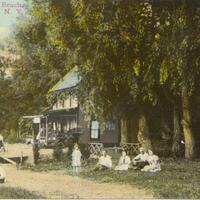
This collection includes images and documents relating to the Ulster County Fair held in Ellenville. It includes images of parade floats, the fairgrounds, and special events, as well as advertisements for the fair and other ephemera.
For more information, visit the online exhibition The Early Ulster County Fair.
Browse within this collection
Browse similar collections

Collection Facts
Historical Context
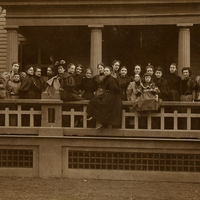
The Twentieth Century Club of Buffalo, one of the first private clubs for women in the United States, was founded in 1894 "to advance the interests of education, literature and art" (Source: "Twentieth Century Club of Buffalo, History"). Charlotte Mulligan, a teacher, writer, and musician from a well-to-do family was the driving force behind its creation. She envisioned a club rich in tradition, education, and culture, and the elegant Green & Wicks-designed Clubhouse, with characteristic symmetry and balance, is a testament to that vision. It is the oldest women's clubhouse in the country and on the National Register of Historic Places. The Twentieth Century Club became noted for the many lavish social events held there, but education was, and still is, the primary focus of activity. Starting with an 1894 lecture on Abraham Lincoln, and continuing through the present, the Club has a long tradition of presenting prominent speakers and programs by recognized experts on a wide variety of subjects. From the 19th century, when women couldn't vote and had limited opportunity, to today in the 21st century when possibilities seem limitless, the Twentieth Century Club has truly spanned its namesake century and connected those prior and succeeding. Its history parallels and chronicles not only the history of events in Buffalo, but also that of the enormous societal changes which have occurred in its lifespan.
Scope of Collection
The collection includes many photographs of the Twentieth Century Club clubhouse and events held there. There are portraits of prominent members, speakers, and of Club Presidents. Some of the text documents include: invitations to TCC events, event announcements, and clubhouse blueprints. The collection spans the development of the Club from the late 19th century to present day.
Browse within this collection
Browse similar collections


Collection Facts
Scope of Collection
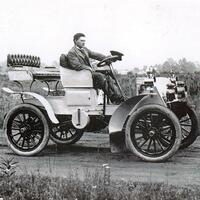
This collection includes photograph albums with images documenting events, people, and places around Tuxedo Park.