![The [George Nathan] Newman Collection of Photographs of Vanished and Vanishing Buffalo](/sites/default/files/styles/collection_cover_extra/public/content/collection/covers/VHB004.jpeg?itok=2B1mQDtx)
Collection Facts
Historical Context
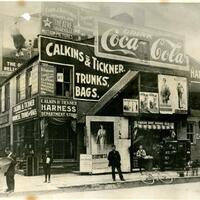
George Nathan Newman, in life and upon his death in 1951, had donated extensive collections of books, records, and many photographs to the Grosvenor Library. Among the treasures that the Buffalo & Erie County Public Library inherited when the Grosvenor Library, Buffalo Public and Erie County Libraries merged was a black-and-white photograph collection compiled and donated by Mr. Newman. The Newman Collection of Photographs of Vanished and Vanishing Buffalo is a multi-volume photo album containing images of Buffalo's and the surrounding area's rich local history. The images are black-and-white reprints of Buffalo and the region primarily from the 1800s and early 1900s. The photos capture buildings (theaters, businesses, residences) and streets in Buffalo and the Niagara region that no longer exist or have changed beyond recognition.
Scope of Collection
The collection includes black and white photographs and lithographs of buildings, street views, Fort Niagara, and related scenes in Western New York ranging from the early 19th century to 20th century.
Browse similar collections

Collection Facts
Historical Context
The Western New York Index was created by the Buffalo & Erie County Library System and printed from 1983-1996. It indexed news, features, articles and reviews appearing in the city edition of the Buffalo News, Buffalo Spree, Business First, Western New York Magazine, and the WNY Genealogical Society Journal. Each volume covers one individual year, and also includes a separate Personal Names section.A print copy has been in the collection of the Western New York Library Resources Council since that time, and is still used by researchers. This collection was digitized on behalf of WNYLRC by the University at Buffalo. The images include searchable text.
Scope of Collection
The collection includes annual indexes from 1983 through 1996 which records articles published in Buffalo News, Buffalo Spree, Business First, Western New York Magazine, and the WNY Genealogical Society Journal.
Browse within this collection
Browse similar collections

Collection Facts
Historical Context
The Town of Saratoga is located in Saratoga County. It is a landmark for a famous battle during the Revolutionary War, in 1777, which is considered a turning point in the war, giving Americans an advantage over the British.
Scope of Collection
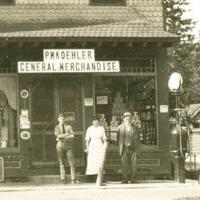
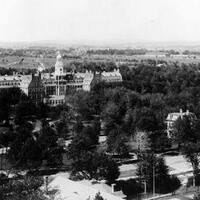
The Way We Were Town of Saratoga collection includes vintage postcards and photographs with descriptive captions from the first half of the 20th Century in the Villages of Victory and Schuylerville along with the Town of Saratoga.
Browse within this collection
Additional Information
The Local History Collection of Schuylerville Public Library is a wonderful resource of images and information about old Saratoga area. The collection includes documents and images about from the Schuylerville area and the Town of Saratoga.
Browse similar collections

Collection Facts
Scope of Collection
The Student was a monthly/bi-monthly literary magazine published by Freeport High School. It was established in 1905 by three students, Edgar H. Osterhout, George C. Colyer, and Stephen B. Story. It was described as “A magazine published by and in the interests of the students of Freeport High School."
Browse within this collection
Browse similar collections

Collection Facts
Historical Context
Franklin Delano Roosevelt (FDR) and Eleanor Roosevelt visited Syracuse at various times in the 20th century for presidential campaign visits, community outreach, Democratic conventions, and family visits.
Scope of Collection
The collection includes black and white photographs and related documents, including invitations and admission tickets. The images include: a campaign visit by FDR in approximately June of 1932 while he was governor, but running for the presidency of the United States. Another group of photographs document the laying of the cornerstone of the Basic Sciences Building for the Syracuse University College of Medicine, now Upstate Medical University. The laying of the cornerstone took place on September 29, 1936. These ceremonial images include FDR posing with trowel in hand, laying the cornerstone, FDR at the podium giving a speech and a picture of the motorcade making its way through Syracuse. Another photo shows Eleanor later that evening and the next day at the state Democratic convention which took place at the Hotel Onondaga. Finally, there is a group of photographs from 1956 of Eleanor Roosevelt giving speeches, speaking to a WSYR radio audience and attending the graduation of her grandson at Jamesville DeWitt High School. Additional non-photographic items include invitations and text materials from the above historical visits.
Browse within this collection
Browse similar collections

Collection Facts
Scope of Collection
This collection includes four recorded interviews with Helen Sheppard, Peggy Sterne, Douglas Millar, and Hadassah Fendius, all residents of The Oaks at Menorah Park, a senior living facility in DeWitt, New York. The interviews address the personal history of the participants. Subjects include immigration, education, family, occupations, and personal interests. The interviews were completed between January and February 2017 by Elizabeth Weinstein, a volunteer at the Oaks and a former President of the Tully Free Library’s Board of Trustees.
Browse within this collection
Browse similar collections

Collection Facts
Scope of Collection
The Normal Leader is the student newspaper of the State University of New York at Fredonia, first published in 1893. Originally published by the all-female Agonian literary society, after its very first issue, it became the publication of both the Agonian and the Zetesian (all-male) literary societies. The newspaper shortened its official name to The Leader in 1936 and is the title under which it is still published today. Heavily focused on literary content in its earliest years, the newspaper remains one of the most frequently requested and accessed published titles within the Special Collections & Archives Division of the Daniel A. Reed Library at Fredonia, which underscores its importance in supporting both college and regional history, as it provides a unique look into the history and culture of higher learning in Western New York. This digital collection was made possible through a 2018 Regional Bibliographic Databases (RBDB) Grant from the Western New York Library Resources Council.
Browse within this collection
Additional Information
The physical collection of bound volumes of The Normal Leader student newspapers spans from its first issues in 1893 through 1936 when the name of the newspaper was shortened to The Leader, which is still currently being published. The Normal Leader Student Newspaper collection represents earlier issues of the paper from its founding days, which are in the public domain.
Browse similar collections

Collection Facts
Historical Context
In 1882, realizing the potential of Niagara for generating electricity on a commercial scale, Jacob Schoellkopf installed a small hydroelectric generation station, which provided electricity directly to the nearby town of Niagara Falls. As a result, the Niagara Falls Hydraulic Power and Manufacturing Company became the first company to generate hydroelectric power from Niagara Falls. This had a massive effect on Niagara Falls, which saw its population increase and employment in the power generating industry soared.
Throughout the years, the company would go through many changes. In March 1910, the Niagara Falls Hydroelectric Power and Manufacturing Co. was renamed to the Hydraulic Power Company. Then, facing bankruptcy in 1918, the company, with urging from the US government, consolidated with Edward Dean Adams and became the Niagara Power Company. Much later, it would become known as Niagara Mohawk. On June 7, 1956, the Schoellkopf Power Station was destroyed due to several rock slides which caused a portion of the gorge wall to collapse.
Scope of Collection
The Niagara Falls Hydraulic Power and Manufacturing Company: A Visual History Collection is comprised of over 600 photographs and 5 maps dating from approximately 1896-1956. These images document the construction of the power plant in its various phases and show workers building walls, placing generators, digging tunnels, digging the canal and doing many other tasks to complete the first power plant in Niagara Falls. There are later photographs of further construction, the buildings neglected in disuse and the collapse in 1956. There are also photographs of ALCOA, other industries, the Canal and the overall natural landscape.
Browse within this collection
Additional Information
634 photographs, 5 maps
Browse similar collections


Collection Facts
Historical Context
The Liberator was an anti-slavery newspaper which was published between the years of 1831 through 1865 by William Lloyd Garrison and Isaac Knapp in Boston, Massachusetts. After the ratification of the 13th amendment in 1865, abolishing slavery, the newspaper was published under a new title: The Nation.
Scope of Collection
The Liberator collection contains 29 issues of the weekly newspaper, dating from 1842 through 1865. The contents relate to the abolitionist movement, the support of African Americans, and the Civil War.
Browse similar collections

Collection Facts
Historical Context
The Jamaica Parlor Car was built in 1912 by the American Car & Foundry Corporation for the Pennsylvania Railroad company, to be used by its subsidiary company, the Long Island Railroad Company. It was one of ten such cars built to be used as a first- class cars that could carry 26 passengers to their destination.
In 1925 it was reclassified as a business car for use by LIRR executives and renamed, “The Montauk “.
In 1930 it was rebuilt as an Observation Car with 3 state rooms, a solarium, dining room, galley and valet and cook quarters. An Observation Deck was added to the back of the car.
In 1941 the car was sold to the Pennsylvania Railroad Company, which outfitted the car with air conditioning.
It was sold back to the LIRR in 1949 for $26,434.00 and renamed,” The Jamaica”. It was used on an express train known as the,” Cannonball Run”, that ran from Pennsylvania station to Montauk Point.
The Jamaica was retired in 1968 and slated to be scrapped, where it was noticed in the Sunnyside railroad yard by society member Warren Hiltonsmith. He convinced the LIRR to donate the car to the Wantagh Preservation Society. With help from the railroad and local construction companies the Jamaica was moved to the Wantagh museum in October,1972.
A dedicated group of society members and other community groups spent 14 years restoring the car in time for the opening of the restored Wantagh Train Museum.
After a period of neglect a second restoration was undertaken from 2011 to 2016 in time for the 50th anniversary of the society’s saving of the Wantagh Station.
The Jamaica is the last of the Parlor Cars built a century ago. It is 80 feet long, 14 feet high and weighs 80 tons. It was made of rolled steel and was, “state of the art” for its day, with direct current electricity and ice filled air conditioning. It represents a luxury style of traveling from a bygone era.
Scope of Collection
Pictures of the parlor railroad car during its active use by the LIRR. Tickets and schedules and other memorabilia from the LIRR. Pictures and documents of the 2 restoration efforts spanning the 50 years the Jamaica as a part of the Wantagh museum complex.