In 1652 the first Anglo-Dutch colonists began arriving in the fertile lowlands of the Esopus Valley where it passes close to the confluence of the Hudson River and Rondout Creek at modern-day Kingston. This area, part of the traditional homelands of a Lenape people known to history as the Esopus, was situated at the midpoint between the Dutch colonial outposts of New Amsterdam and Fort Orange/Beverwyck. Motivated by a variety of goals, these colonists initiated a complex process of gradual dispossession that threatened to plunge the region into open conflict. On the order of Peter Stuyvesant, Director-General of the Colony of New Netherland, the scattered settlements of these colonists were consolidated behind a stockade wall and the community was conferred the name Wiltwyck in 1658. Endowed with its own court of Schout and Schepens, this newly minted seat of colonial power in the mid-Hudson Valley became the flashpoint of a disastrous regional conflict fought in two phases from 1659-60 and 1663-64 known today as the Esopus Wars. The resolution of this conflict occurred against the backdrop of the English takeover of New Netherland, and by 1665 the English were in firm control of the colony. The seat of the regional court at Wiltwyck, which served both judicial and municipal roles with all proceedings recorded by an appointed secretary, persisted almost unchanged until the 1680s when it was gradually supplanted and phased out by the government of the new County of Ulster organized in 1683. Ulster County Deed Book AA, pages 50 and 51, record the deposit of these early Dutch-language materials and sundry other public papers with the Ulster County Clerk in 1686.
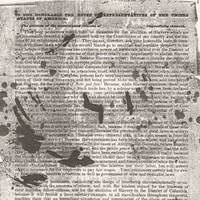
In 1855, it was discovered that the Dutch records had gone missing from the Clerk's Office, and the records were feared to have been lost to unscrupulous private collectors. The mystery of their disappearance was resolved unexpectedly when the records arrived anonymously by mail back in Kingston from Long Island in 1895. It appeared a historian had removed the records in the hope of translating them, only to have the project upended by an untimely death. The papers languished in a private residence until they were discovered and returned by a relative forty years later. The episode on its whole demonstrated a need to improve the accessibility of these ancient papers, so the Ulster County Board of Supervisors commissioned a translation of the books by Dingman Versteeg of the Holland Society between 1896 and 1899. The completion of this task made the records available for the first time to a new generation of scholars and historians with no grounding in the Dutch language. In 1976, a team of scholars from the Holland Society compiled a typewritten manuscript comprising Versteeg's original translation, revisions by Samuel Oppenheim, and edited by Peter Christoph, Kenneth Scott, and Kenn Stryker-Rodda. Titled The Kingston Papers, this invaluable published version of the Dutch Records ushered in a new wave of scrutiny and interpretation by an international audience of scholars. In the interest of facilitating further examination of these records, the Ulster County Clerk's Office digitized the original volumes in the mid-2000s and have now made them available online for the first time paired with scans of Versteeg's translation and an invaluable finding aid prepared by Donald Lockhart that correlates the original page numbers with the Versteeg translation and the corresponding pages from the Kingston Papers.