
Collection Facts
Historical Context
Millard Fillmore was the thirteenth President of the United States and served as the executive officer from 1850 - 1853. He also was a member of the New York State Legislature from 1828 to 1832, a member of the United States House of Representatives 1833 to 1841, and Vice President of the United States from 1849 until the death of President Zachary Taylor in 1850. In 1852, he failed to secure the Presidential nomination of the Whig party nomination mainly attributed to the Compromise of 1850 and his signature of the Fugitive Slave Act into law and left office in 1853. He attempted to run for the presidency in 1856 on the American (Know-Nothing) Party ticket but was roundly defeated. After his political career, he went on to organize the Buffalo Historical Society.
Scope of Collection
The papers consist of incoming correspondence from 1817 to 1876, relating primarily to Millard Fillmore's law practice in Buffalo, New York, his political career in New York State, and his service in both the United States legislative and executive offices. Among the papers is correspondence from prominent American politicians, such as Henry Clay, Daniel Webster, President William Henry Harrison, Dorothea Dix, Anna Ella Carroll, and Thurlow Weed. There is an inventory of the books in his library and another of the furnishings taken from the White House at the close of his administration. Included are financial records, legal documents, speeches, writings and notes, newspaper clippings, ephemera, maps, passport, and miscellaneous materials.
Browse within this collection
Browse similar collections

Collection Facts
Scope of Collection
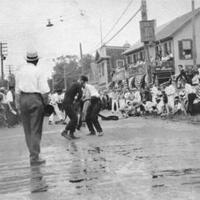
Long Island Maritime Museum Local History Photographs
Browse within this collection
Browse similar collections

Collection Facts
Scope of Collection
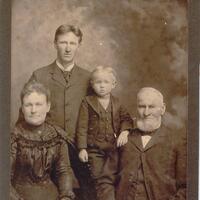
Long Island Maritime Museum Local Families Photographs
Browse similar collections

Collection Facts
Historical Context
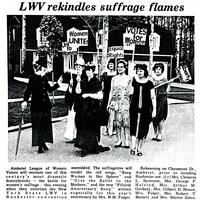
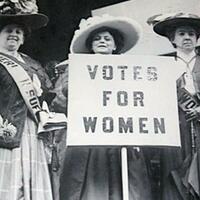
The League of Women Voters of Buffalo Niagara (LWVBN) occupies a distinguished position within the rich cultural heritage of Buffalo, the Western New York region, and nationally as well. Although the national League of Women Voters was founded in 1920 soon after women won the right to vote with the ratification of the 19th Amendment, the local Buffalo League was formed in 1917 because New York State had given women the vote three years earlier than nationally. The purpose of both organizations was to educate women for citizenship and to study the public issues of the day. Since their origin they have widened their reach to welcome all citizens--both men and women--to their membership. Their mission is to ensure that all citizens are informed and prepared to answer questions of local, regional and national concern through candidate debates, issue forums, community dialogues, voter guides, on-line discussions and other educational opportunities. It is most particularly dedicated to ensuring that all eligible voters – particularly those from traditionally underrepresented or underserved communities, including first-time voters, non-college youth, new citizens, minorities, the elderly and low-income Americans – have the opportunity and the information necessary to exercise their right to vote. The League of Women Voters is nonpartisan and does not support or oppose candidates or political parties. Through their hands-on work they advocate for an informed electorate and civic improvement.
Over the years, the League of Women Voters of Buffalo Niagara (LWVBN) has merged with other local Leagues, changed its name and absorbed not just the Leagues of Erie and Niagara Counties but also local chapters in Amherst and East Aurora as well. Today the League of Women Voters of Buffalo Niagara (LWVBN) encompasses all League activities in the Western New York region and is a local branch of: The League of Women Voters of New York State and The League of Women Voters of the United States.
Scope of Collection
This collection holds 200 photographs archival documents, and ephemeral items documenting the important people and events associated with the League of Women Voters of Buffalo Niagara and its distinguished history of service and advocacy as one of the earliest organizations for the empowerment of women via the political process.
Browse within this collection
Additional Information
State University of New York at Buffalo
Browse similar collections

Collection Facts
Historical Context
Itsuzo Sumy was born in the Japanese village of Toba on May 22, 1891. Following graduation from the University of Tokyo with a degree in engineering in 1915, Mr. Sumy worked in Manchuria for 6 years. In 1922 he came to the United States. After traveling around the country with a troupe as a Master of Jujitsu, he settled in Chestertown, New York in 1932, where he operated a photography and novelty shop.
Itsuzo Sumy was a self-taught photographer. He captured every major community event and many social affairs in Chestertown for over three decades until his death in 1970.
Scope of Collection
Itsuzo Sumy documented the Town of Chester, New York through his photography from the 1930s until his death in 1970. He left his extensive photograph collection to the Historical Society of the Town of Chester.
The photographs document the people, events, social life, and day-to-day activities of people in the Town of Chester, New York and the surrounding areas in Warren County, located in the Southern Adirondacks.
Browse within this collection
Browse similar collections

Collection Facts
Historical Context
Henry Darwin Didama (1823-1905) was born in Perryville on June 17, 1823. His father and grandfather, John and Simon Didama, came from Delft, Holland with the Holland Company to settle in Trenton, NY and both worked as doctors. Henry attended Cazenovia Seminary and was a teacher during the winter of 1840-1841. He began practicing medicine in the office of Doctor David A. Moore of Cazenovia and continued under Doctor Nelson A. Powers of Syracuse. He studied at the Geneva College of Medicine and the Albany Medical School, the latter of which he graduated from in 1846 at the age of 23. He then settled in Romulus, where he remained for 5 years and studied under Enos Smith Vail. At this time, he met and married Sarah Miller, the daughter of Honorable Sherman Miller. Henry came to Syracuse in 1851, and in 1874 he bought the Wescott homestead on South Salina Street and made that his office and home for the remainder of his life. The family had three children; Henry Darwin Jr., who died in infancy; Sherman, who died when a medical student; and Amelia, who married William M. Niven and completed a medical course at Syracuse and assisted her father, but died in 1893 from typhoid fever in Florida. With the establishment of the Medical College in 1872, he was elected as Professor of Clinical Medicine, and in 1873, he was made Professor of the Principles and Practice of Medicine and Clinical Medicine, which he served as until his resignation in 1893. After the death of Dean Frederick Hyde in 1888, he was elected Dean of the College of Medicine and received the degree of LL.D. from Syracuse University that same year. In 1894, he was elected Trustee at Large of Syracuse University, which he served as until his death. In addition, he wrote under the nom de plume Amos Cottle about his observations of foreign customs and people in letters to the local press. He most notably served as president of the Onondaga County Medical Society, the Syracuse City Medical Society, the Central New York Medical Association, the Medical Society of the State of New York, the New York Medical Association, and the Syracuse Academy of Medicine, and Vice President of the American Medical Association before his death on October 4, 1905.
Scope of Collection
This collection contains the papers of Henry Darwin Didama, who became a Professor of Clinical Medicine at the Syracuse University College of Medicine in 1872 and Dean of the College of Medicine beginning in 1888.
Browse within this collection
Additional Information
There are five series in this collection. Writings: this series contains the original and typed transcription of Henry Darwin Didama’s diary entitled “Private Journal of the Affairs du Vie, 1842-1852.” Printed materials: these documents include printed materials from and about Henry Darwin Didama from 1875 to 1906. Photographs: these materials are portrait photographs of Henry Darwin Didama and correspondence from 1944 on the donation of two portrait photographs from R.W.S. Vail of Albany, the grandchild of Enos Smith Vail of Romulus. Subject Files: this contains one folder with information on Henry Darwin Didama. Memorabilia: these documents consist of certifications, membership, and diplomas.
Browse similar collections

Collection Facts
Scope of Collection
City directories generally contain business and residential information, a telephone directory, a street directory, local government information, advertisements, and more.
Historic Geneva, the historical society, maintains the physical copies of these volumes.
Browse within this collection
Browse similar collections


Collection Facts
Scope of Collection
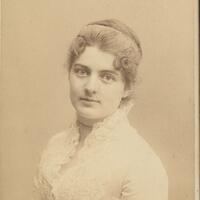
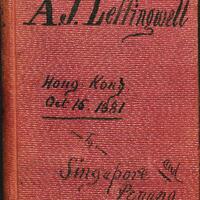
Documents and photos belonging to Dr. Lorraine Welch.
Browse similar collections

Collection Facts
Scope of Collection
This collection consists of scanned images and documents related to the courthouses of Rochester, New York.
Browse within this collection
Browse similar collections

Collection Facts
Historical Context
Formed in 1919, the Zonta Club of Buffalo was the first club in what is now Zonta International, a leading global organization of women professionals.
Scope of Collection
The collection includes 200 photographs, documents and other items showing the club’s history. These unique and previously-unpublished materials are from the organization’s archival collection.