The wrenching processes of relocation and demolition led many affected residents to protest urban renewal projects.
New York City’s Lincoln Square project was the site of some of the earliest protests. Planning began in 1955 and the project went into execution two years later. The goal of the project was to replace several blocks of the West Side (between 60th and 70th Streets) with a performing arts complex (Lincoln Center) and a Fordham University campus. This was a marquee project for Robert Moses, who wanted to ensure New York’s status as a global cultural capital.
However, the area was home to over 6,000 families, including a large Puerto Rican population. The area would become famous to audiences around the country as the neighborhood where the 1957 musical West Side Story and its 1961 film adaptation took place. In addition, Lincoln Square was intended to be part of a series of renewal projects on the West Side, from Chelsea at 23rd Street to Harlem a hundred blocks north.
Public hearings in 1957 allowed area residents to vent their frustrations to city officials, though the hearings did nothing to stop the project. Puerto Rican activist Aramis Gomez testified at one hearing that this project was “inhuman” because of the lack of relocation housing. He continued, “Well, I am all for progress, but if it is at the expense of the poor people, then I am against it. Why, this is more like the old West, where we, the poor people, are the Indians with valuable land that the settlers want.”
During the 1960s, protests went beyond testifying at public hearings. Many American cities erupted in racial violence, often stemming from consequences of Urban Renewal. Residential segregation and overcrowded housing conditions were major drivers of this violence. Many inner-city residents believed that “Negro removal” (as James Baldwin famously labeled the Urban Renewal program) was one of the causes of this frustration and violence.
In response, President Johnson in 1967 set up a National Advisory Commission on Civil Disorders (commonly referred to as the Kerner Commission) to investigate the causes of urban uprisings and to recommend ways to avoid future conflict. The commission warned: “Our nation is moving toward two societies, one black, one white—separate and unequal,” recommending the construction of much more housing for low and moderate income households, and “a reoriented and expanded Urban Renewal program” that would prioritize the needs of area residents.
In July 1964, Rochester’s Third and Seventh Wards erupted in three days of violence that left five dead and over 300 injured. Some 200 stores were ransacked. In the wake of this incident, community leaders formed an organization called FIGHT (standing for Freedom, Integration, God, Honor, Today). Over the next few years, FIGHT led the call for meaningful community control over Rochester’s Urban Renewal program. In June 1965, the organization demanded that a fifteen-member board drawn from the community would oversee all aspects of this–and future Urban Renewal projects.
FIGHT’s demands showed that a transition was taking place with respect to public participation in the Urban Renewal program. According to federal regulations, municipalities had to ensure public participation that was representative of the communities affected.
More often than not, however, this was window dressing. Many planning commissions and citizens’ advisory groups did little more than rubber stamp decisions. In Kingston, for example, a committee of downtown businessmen was the main forum for public participation. Even the public hearings required by federal regulations were sparsely attended.
In 1966, Kingston’s local CORE chapter found that true community participation in Broadway East was a “largely unrealistic goal.” Instead, community members felt helpless. “Urban renewal is considered like the weather: everyone complains about it but no one can do anything about it.”
A few months later this would change. In the summer of 1967, residents convinced Congressman Joseph Resnick (D-NY 28th District) to visit and hold a daylong hearing. Disturbed by what he saw and heard, Resnick recommended that federal officials freeze Kingston’s urban renewal funding until the Urban Renewal Agency director and the entire leadership were fired and replaced.
Botched relocation in Rockville Centre on Long Island led to federal intervention on behalf of the beleaguered residents. The village’s Urban Renewal project targeted its African American population almost exclusively. Displaced families protested the project throughout 1965. Village officials dismissed their complaints, and even hired private investigators to monitor protestors, which included local clergy. In 1966, Congressman Herbert Tenzer (D-NY 5th District) intervened. He brought the situation to the attention of federal officials, who directed village officials to improve the relocation process.
In 1966, the Nassau County Commission on Human Rights concluded that the Urban Renewal program had created “serious tension and conflict” between African American residents and village leadership. The Commission’s findings reinforced African American displaced residents’ belief that they had been targeted for removal from the village.
Protests and unrest in places like New York City, Rochester, Kingston, and Rockville Centre helped create an awareness that Urban Renewal was failing to improve housing conditions for poor families. In fact, the opposite had happened–the supply of low-cost housing typically dropped in cities with Urban Renewal projects.
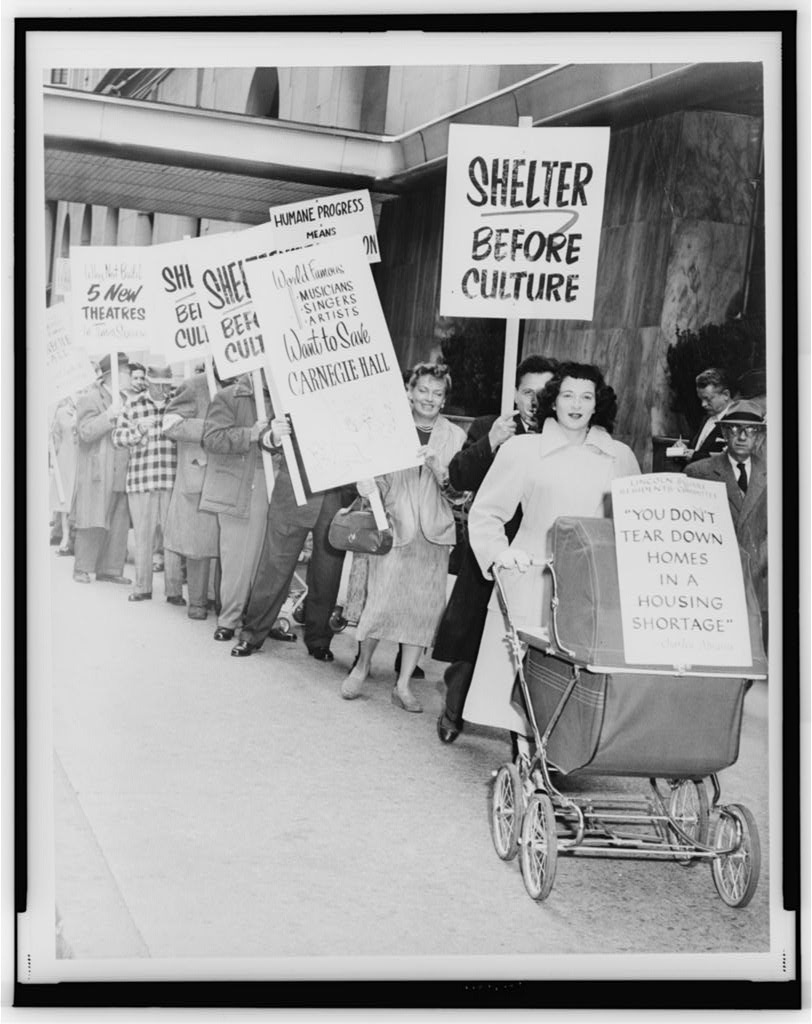
Residents protest the destruction of the Lincoln Square neighborhood to build Lincoln Center, 1956. Protester signs read things like "SHELTER BEFORE CULTURE."
World Telegram and Sun photo by Phil Stanziola, courtesy of the Library of Congress.
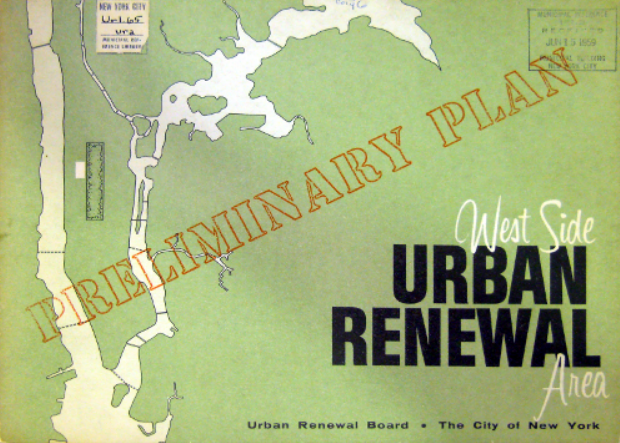
Unidentified man interviewed by radio station WBAI for a 1962 program, “The Death of a Neighborhood,” about the West Side Urban Renewal Area between 87th and 97th Streets, Central Park West to Amsterdam Ave.
Courtesy of the American Archive of Public Broadcasting
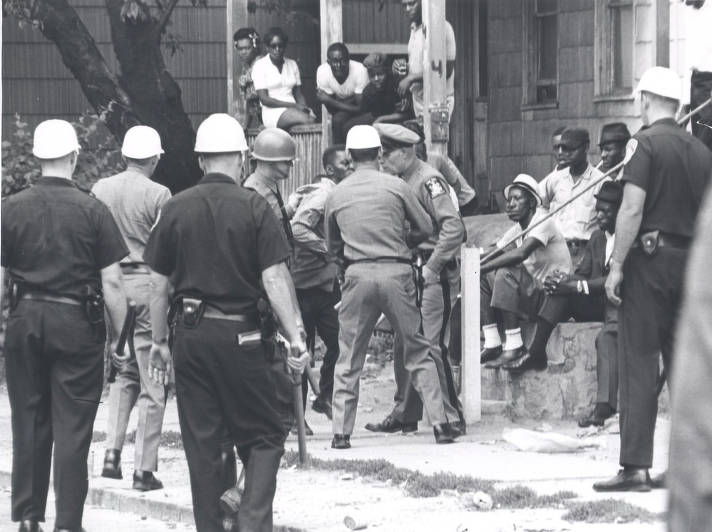
Police and residents confront each other during unrest in Rochester in July 1964.
Courtesy of the Rochester Municipal Archives Collection, Local History & Genealogy Division, Rochester Public Library
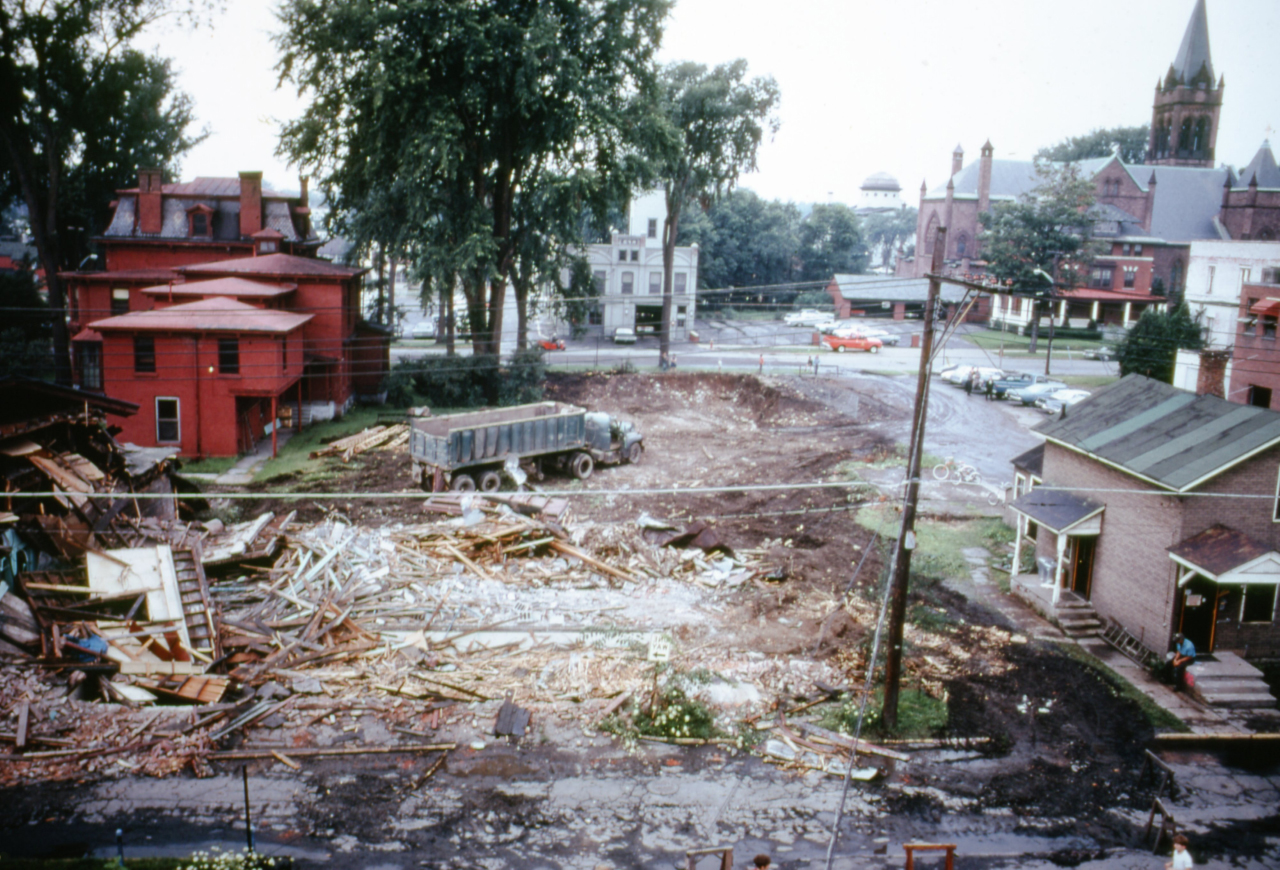
As cities began demolishing buildings and destroying neighborhoods, area residents moved from passive acceptance to active protest. Demolition scene from Rome, 1970s.
Courtesy of the National Park Service, Fort Stanwix National Monument Resource Management Records
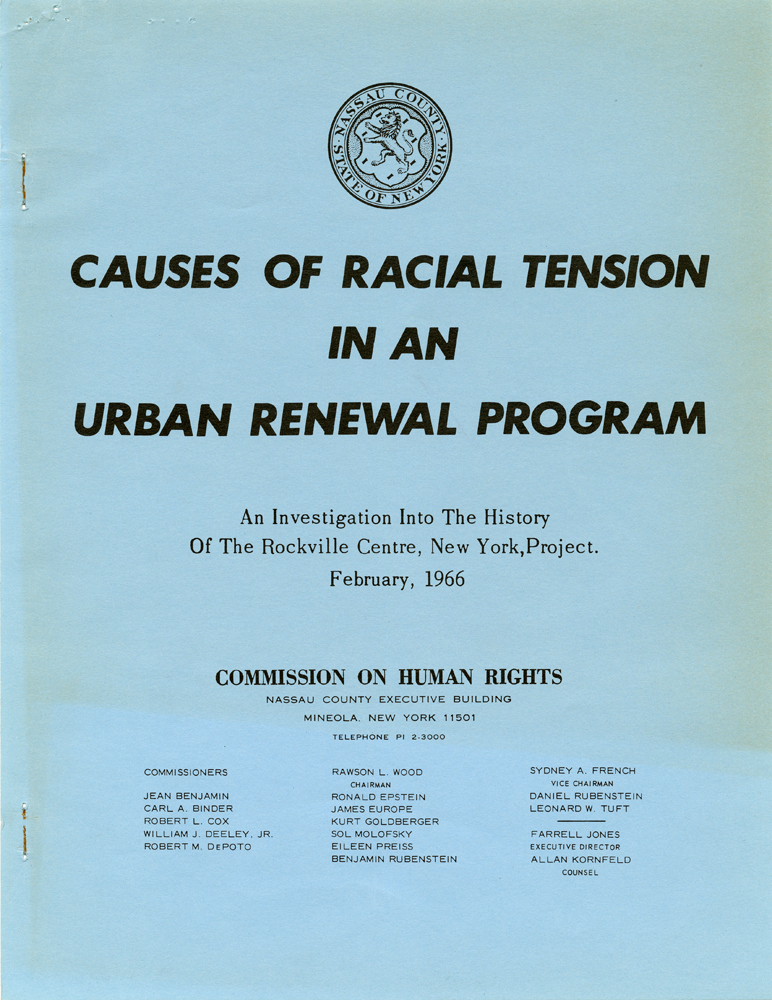
Cover of a report by the Commission on Human Rights, an investigation into the history of the Rockville Centre. In 1966, the Nassau County Commission on Human Rights concluded that the Urban Renewal program had created “serious tension and conflict” between Black residents and village leadership. The Commission’s findings reinforced Black displaced residents’ belief that they had been targeted for removal from the village.
Courtesy of Marquette University