Relocation was the most difficult task during an Urban Renewal project’s execution. Some officials regarded relocation as a chore that they had to quickly work through in order to begin demolition. Even well-intentioned relocation plans were incapable of dealing with the problems associated with poverty, housing discrimination, loss of home and community, and a host of other issues. The relocation stage was typically when public opposition and protest reached a crescendo.
As a condition for receiving federal money for execution, local Urban Renewal officials had to assure federal regulators that they had a plan to rehouse those displaced. Yet relocation plans rarely achieved their stated goal of rehousing everyone. Public housing did not provide enough replacement units. Private housing markets could not meet the increased demand, and Urban Renewal projects tended to create or worsen housing shortages. Those people displaced faced higher rents, about 20% on average nationally and 35% in New York City.
How smoothly relocation went depended on demographic and racial characteristics. Many landlords refused to rent to Black families, families with several children, or families headed by women.
In 1965, the Kingston chapter of the Congress of Racial Equality (CORE) investigated charges of racial discrimination in relocation housing. They met with the Urban Renewal Agency relocation director Ralph Marallo and asked him whether there were “any places ready” to relocate 340 families from the Broadway East project area. Marallo responded by showing them a map on his wall with pins “showing available housing.” When asked about their tests showing that landlords refused to rent to Black families, Marallo replied, “Then they should go to the proper authority. This office is not responsible for the landlord’s actions.” CORE wrote a report on the housing situation in Kingston and sent it to Robert Weaver, the federal official in charge of the Urban Renewal program.
The elderly were especially hard hit by relocation, financially as well as psychologically. Many relocated elderly people had lived in their homes for decades, and the loss of community and familiar surroundings was often disorienting. Sarah Kramer told Kingston officials in 1965 that “I never paid rent since I was married that is 53 years ago. And now that I will essentially have to get out of where I am, I will have to pay rent as at this age it would not pay to buy.” She also stated that her husband was chronically ill and that any money from the sale of their home would go to his health bills.
Retired chiropractor Joseph Desmond complained to the city of Mechanicville that the stress of relocation had aggravated his and his wife’s chronic and debilitating arthritis: “Our conditions worsened (and this has been certified by medical doctors) because of the anxieties brought about by Urban Renewal.”
In Albany, Lazarus Kontis had owned his home above his shoe repair shop for over thirty years. In the fall of 1963, the family moved to a new home. Lazarus kept walking downstairs to find his shop, which of course did not exist at his new home. Three years later he died, suffering from dementia.
After residents and businesses had been moved out of a project area, demolitions began. The first demolitions were often public relations affairs. Mayors, city council members, Urban Renewal agency directors and staff, and even schoolchildren all posed on the sites of these demolitions, in an effort to portray what was happening in a positive light.
Yet sometimes these media events went awry, and often did not show the more traumatic impacts of these demolitions in longtime, close-knit neighborhoods. In Albany, for example, the first demolition for the South Mall took place in July 1962. It was a “spot” demolition to remove a vacant row house while leaving adjacent–and still occupied–row houses still standing. One adjacent building, home of Francisca Abarca, developed a huge crack in its wall the next day, requiring the emergency evacuation of Mrs. Abarca and her family and tenants two days later.
Even–or especially–when demolition went as planned, it was often messy and dangerous for residents. Joseph Lyford, a journalist living in New York City’s West Side Urban Renewal Area, described it like this: "The wreckers would…begin at the top, working down story by story, gutting the rooms, ripping out woodwork, electrical wiring, plumbing, and fixtures. Once this was done, the men would hammer the shell of the house with sledges. Sections of brick wall would shudder, undulate for a second and dissolve into fragments that fell in slow motion. When the fragments hit the ground, the dust rocketed several feet into the air."
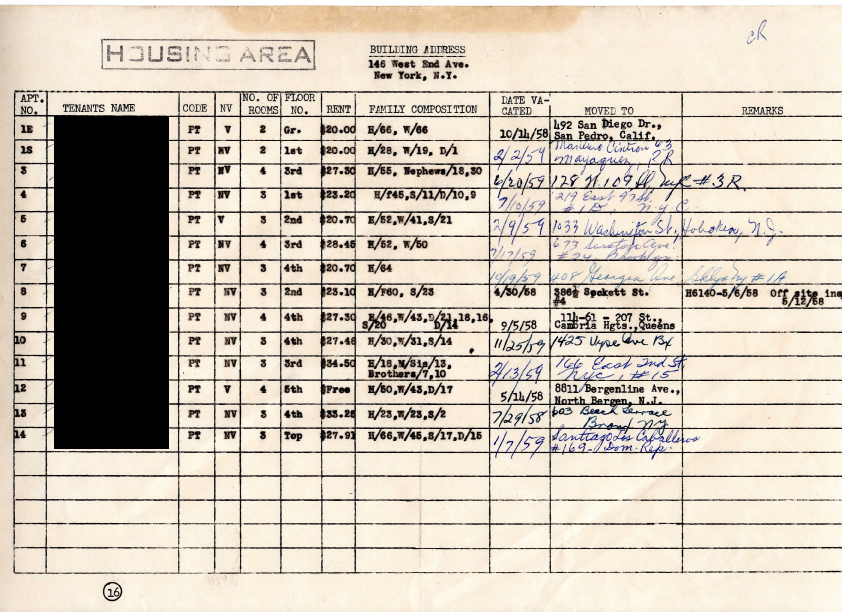
Tenant relocation form for a building in the Lincoln Center Urban Renewal project area.
Courtesy of the New York City Municipal Archives
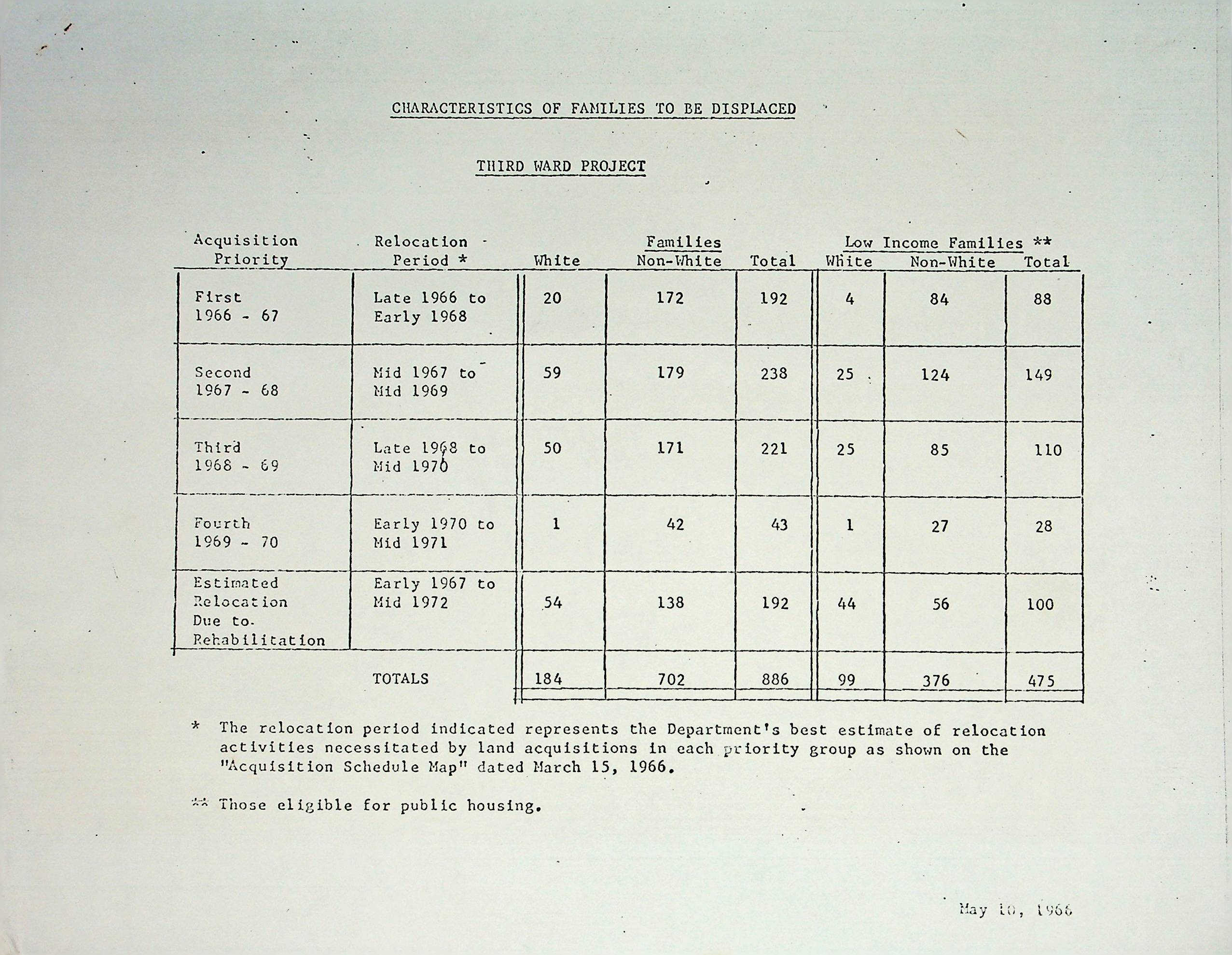
Relocation schedule for Rochester’s Third Ward Urban Renewal project. Out of the 886 families being displaced, 702 were nonwhite.
Courtesy of the Franklin Florence Papers, University of Rochester
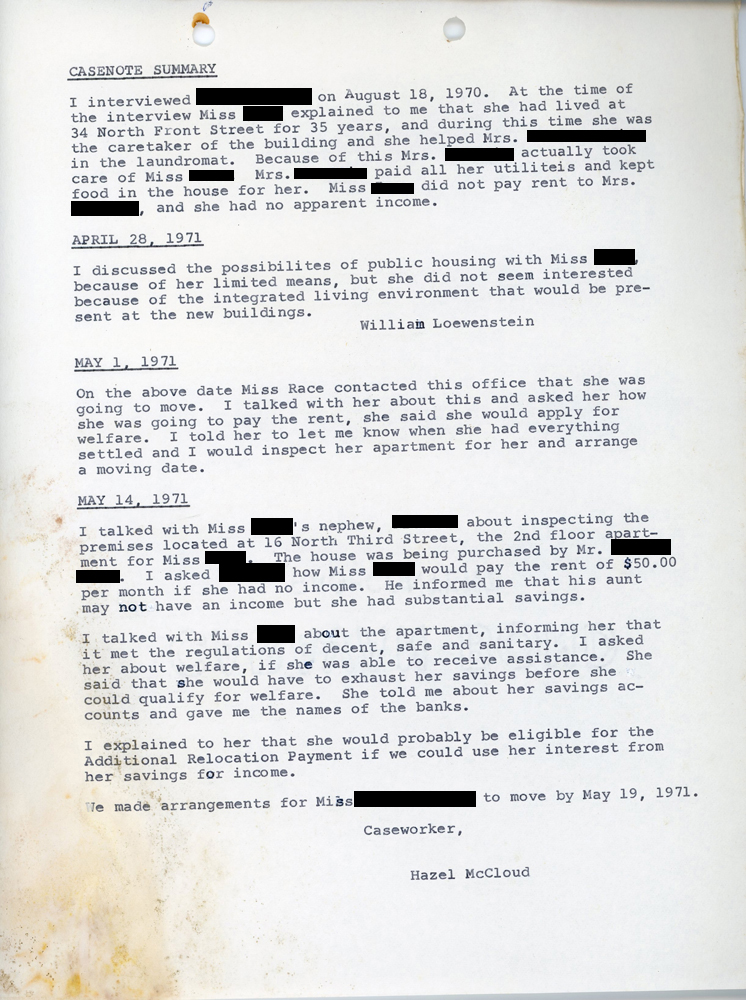
Relocation caseworker notes for a Hudson relocatee, who had no income but had worked in a laundromat in informal exchange for room and board. The relocatee did not want to go to public housing because it would be racially integrated.
Courtesy of the Hudson Urban Renewal Agency Records
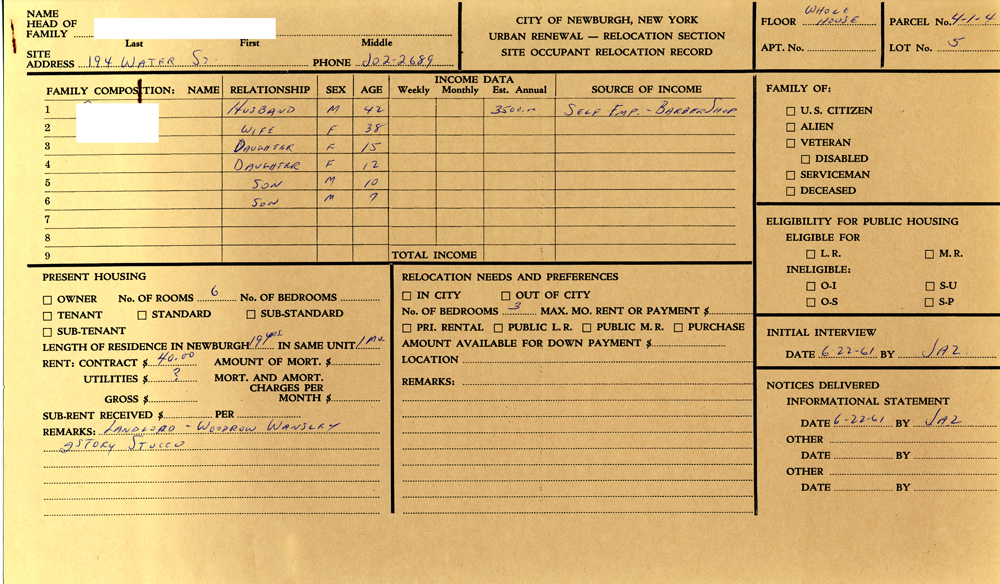
Front of a relocation card from Newburgh’s Water Street project, 1961, showing a family of six. The father is a self employed barber.
Courtesy of the Newburgh Urban Renewal Agency Records
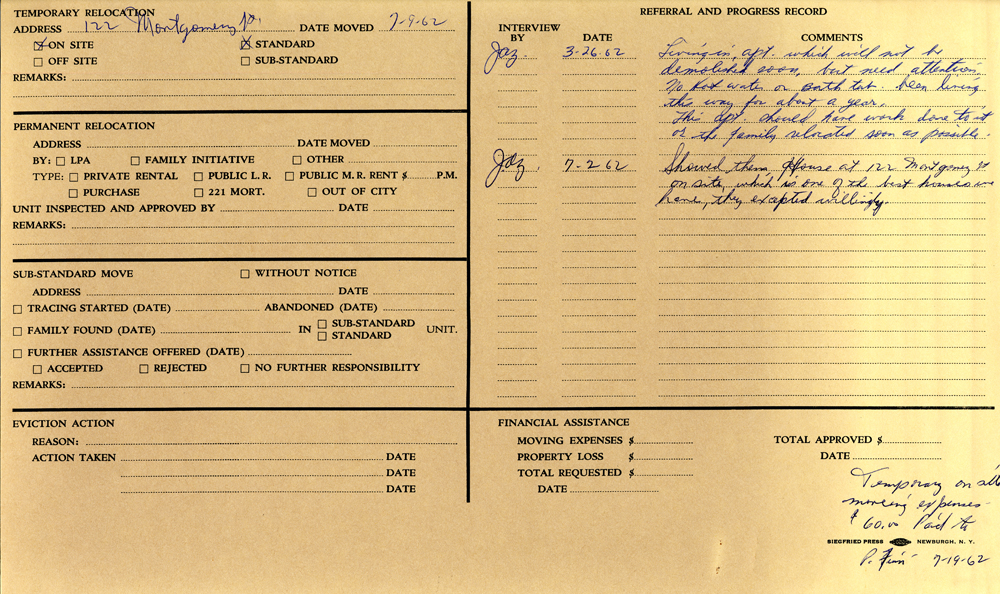
Back of a relocation card from Newburgh’s Water Street project, 1961.
Courtesy of the Newburgh Urban Renewal Agency Records
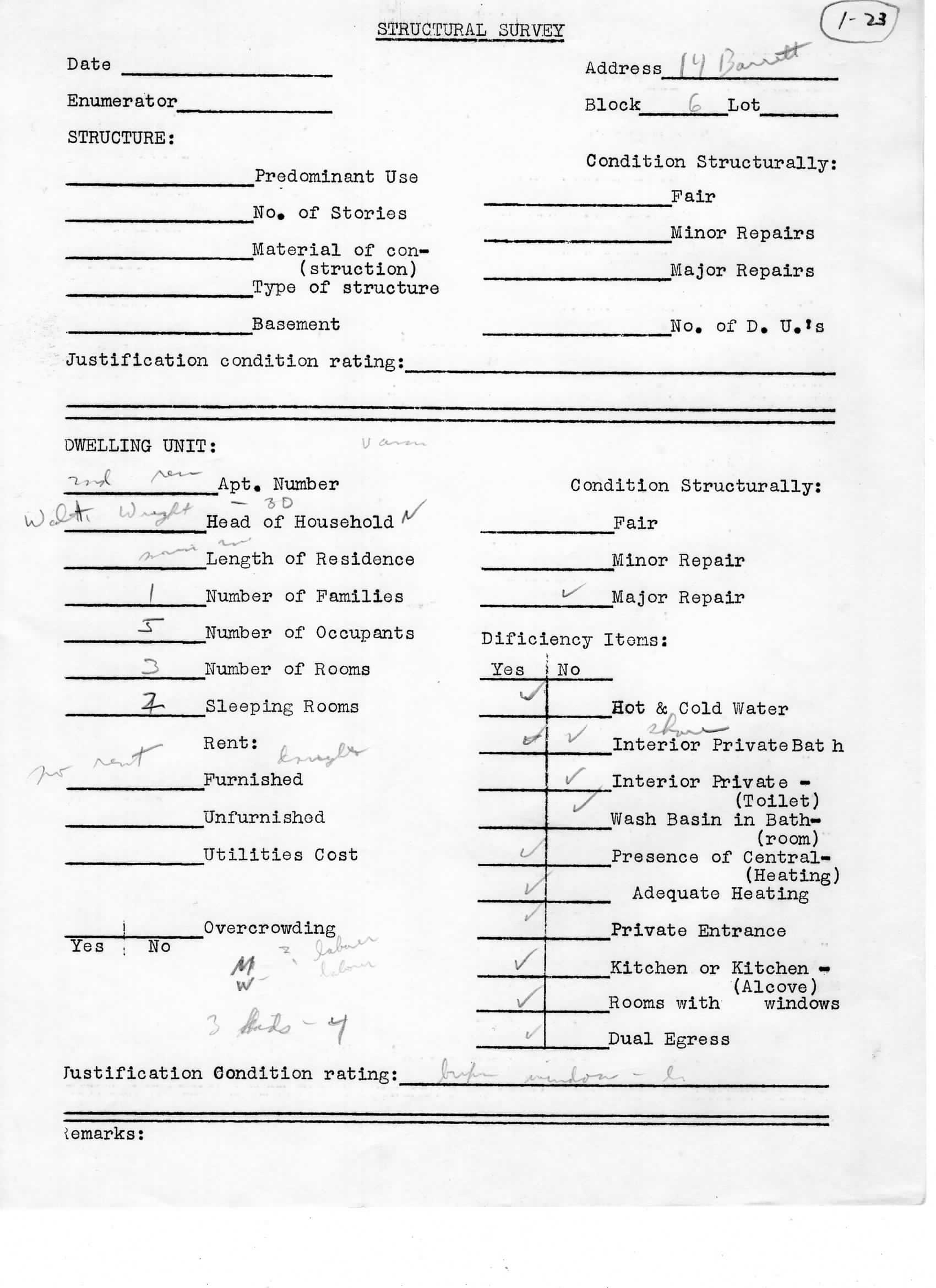
Worksheet used by Schenectady Urban Renewal Agency to evaluate suitability of apartments for relocating families.
Courtesy of the Schenectady Urban Renewal Agency Records
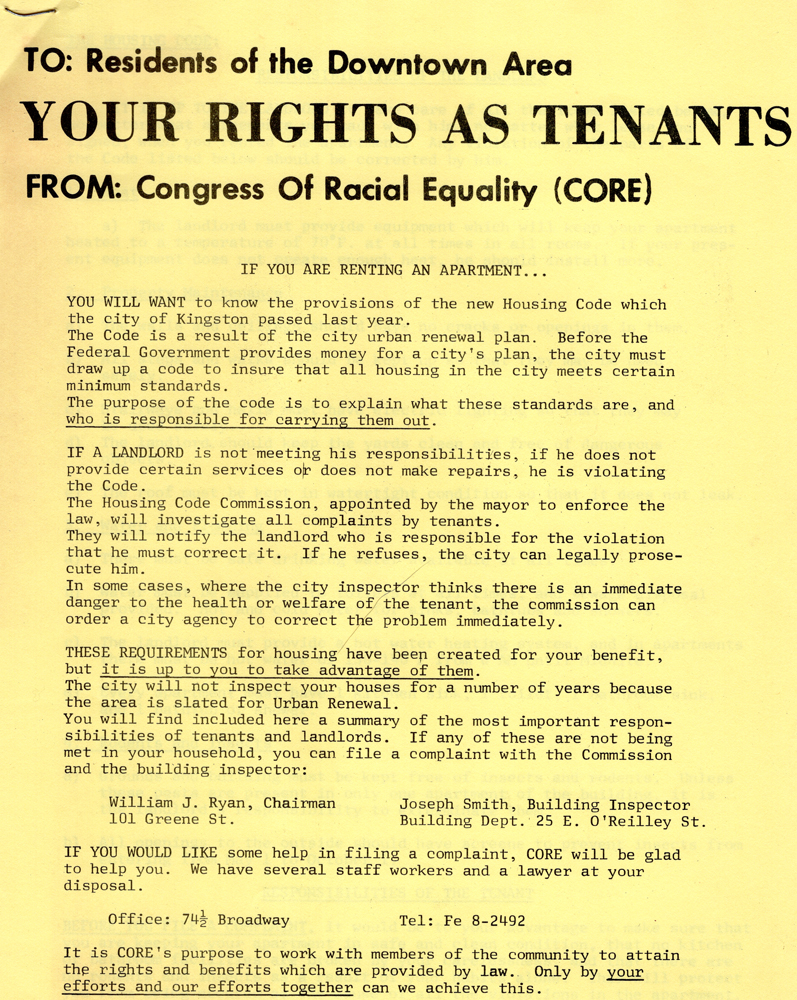
Circular distributed by CORE to residents of Kingston’s Broadway East project area.
Courtesy of the Kingston Urban Renewal Agency Records
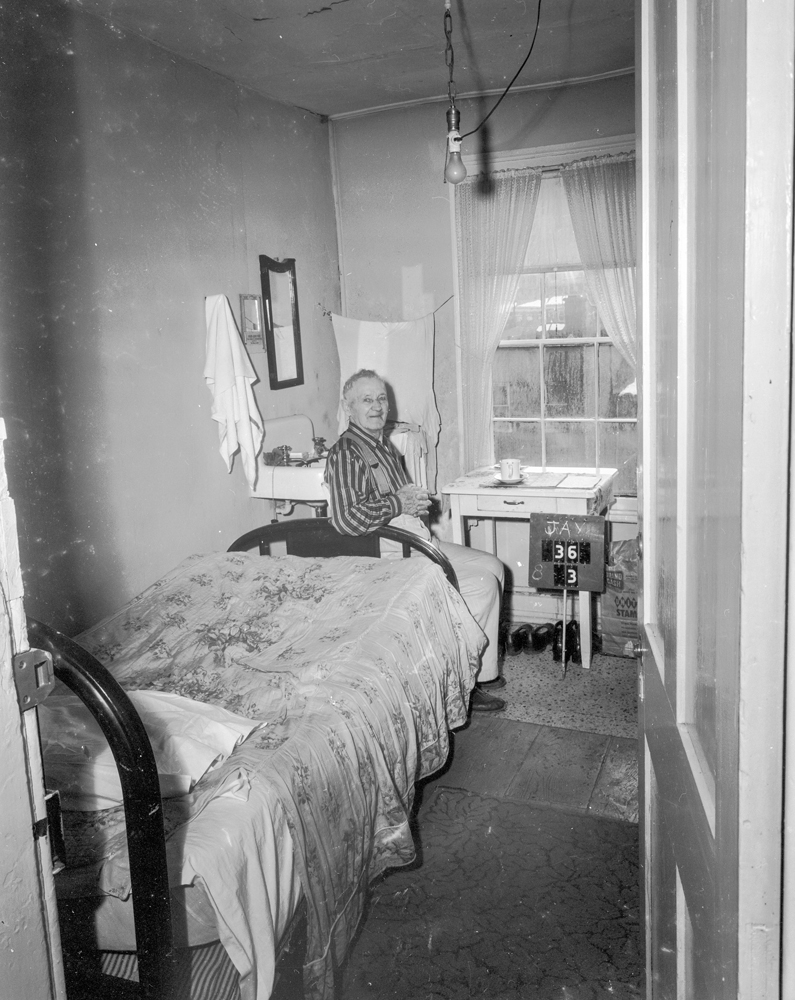
Elderly roomer, identity unknown, in 36 Jay St., Albany. He sits in a chair at the foot of his bed in a narrow room. There's a small desk and a sink. A sign notes the address.
Courtesy of the New York State Archives
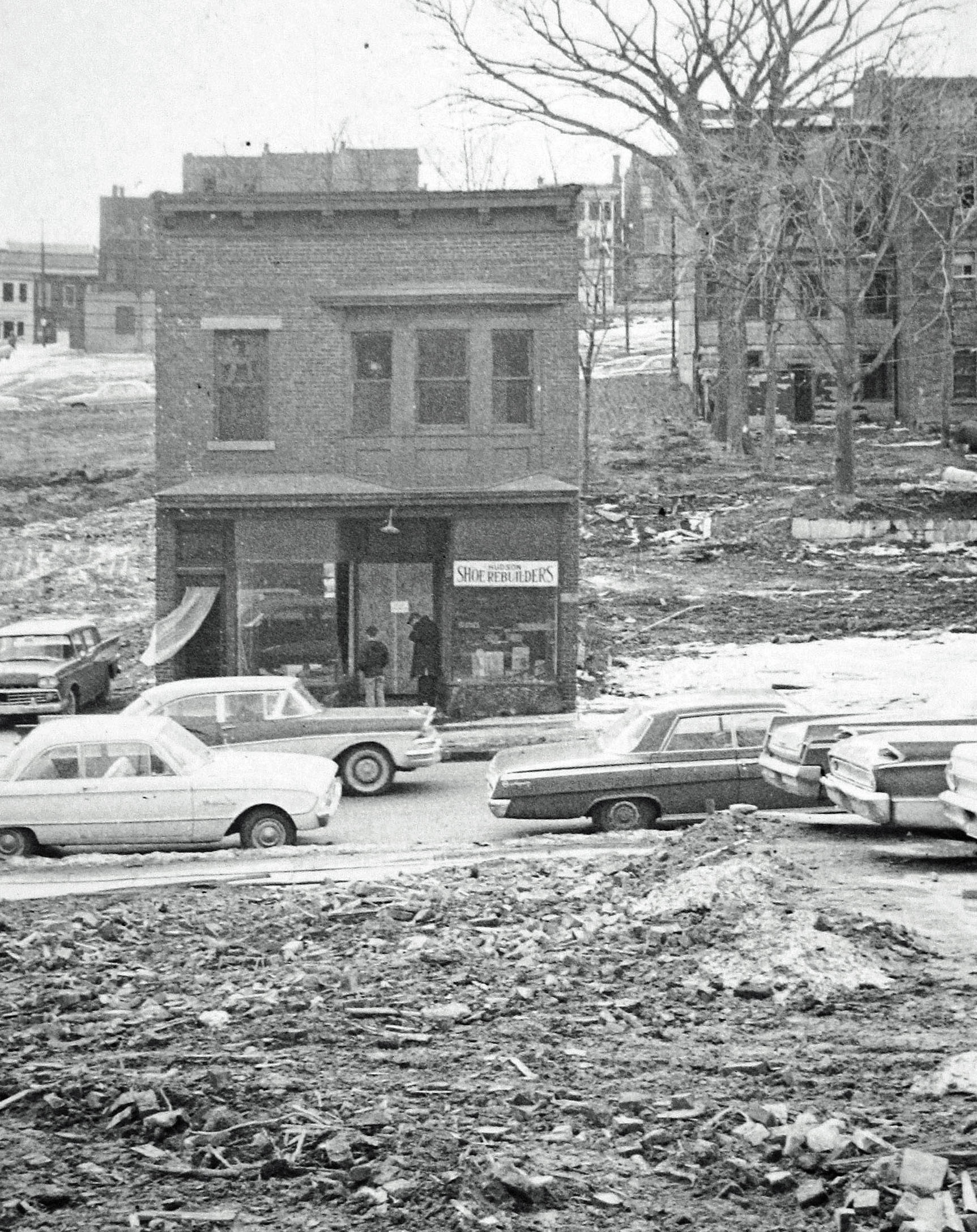
Lazarus Kontis’s Albany home and shoe repair shop, 1964.
Courtesy of the New York State Archives
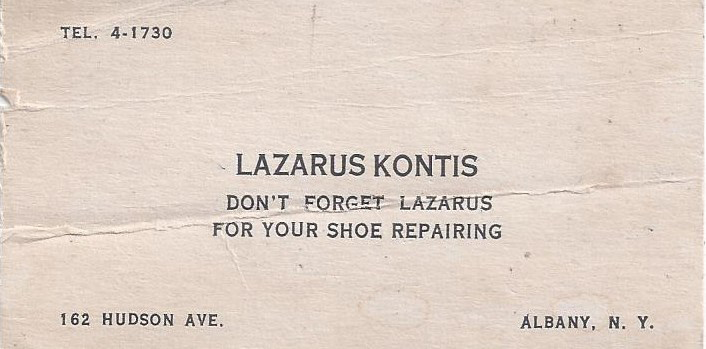
Business card for Lazarus Kontis, shoe repair man.
Courtesy of Angelo Kontis
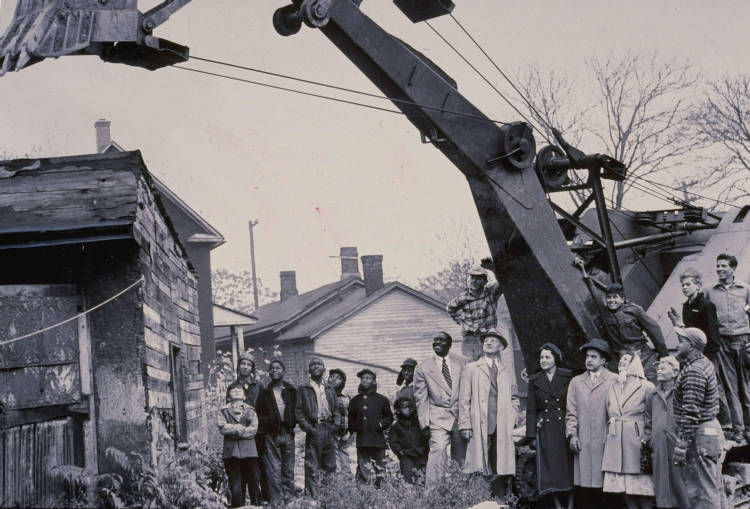
Dignitaries and schoolchildren at the site of the first demolition for Rochester’s Baden-Ormond Urban Renewal project, ca. 1957.
Adults and children watch as a power shovel is poised to begin demolition in the Baden Street neighborhood in Rochester's northeast side. The project was part of a multi-million dollar city redevelopment plan designed to convert overcrowded slum areas into new low-rent housing projects. Adults watching are, from left, Joseph Neal, Edward Perdue, Honora Miller, Irving Kriegsfield, Nellie Cieslik, Rose Altman and James Benvenuto.
Courtesy of Rochester Public Library
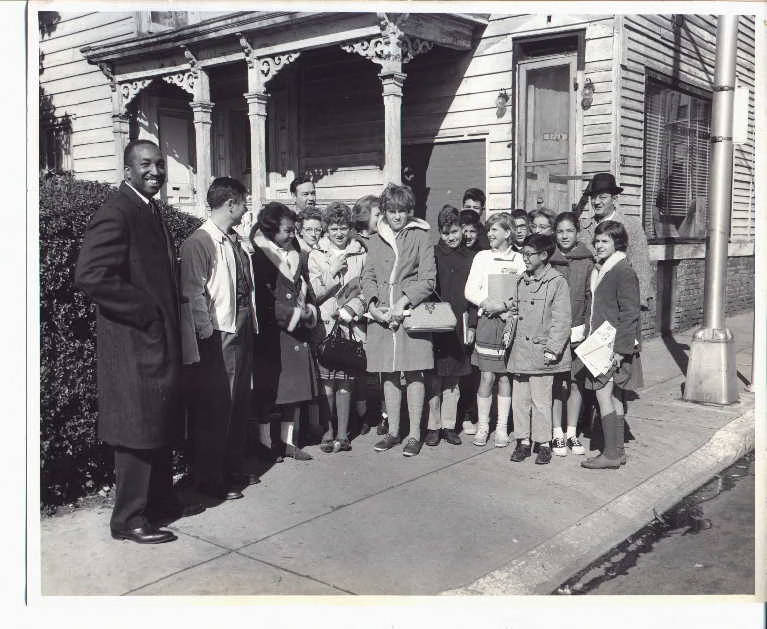
Just before the first demolition in Nyack, ca. 1963.
A note on the back of this photo says: "In background: first structure to be demolished under Urban Renewal. On left, Albert Holland." The other adults are Frank O'Loughlin (UR director), Humes M. Flynn (real estate consultant) and Thomas Glynn (federal disposition agent). The children - Alicia Curry, Connie Sauer, Patty Sedlack, Sandy Soutar, Joseph Cordillo, Kenneth Bookman, Blythe Anderson, David Dalto, Duen Yen, Janice Hutta, Helen Mitard, and Patricia Mian - are from an enrichment class, learning about urban renewal from Gene Setzer. Building in background on South Broadway (opposite A&P) on site of present Tallman Towers. The picture appeared in the Journal-News.
Courtesy of Nyack Library
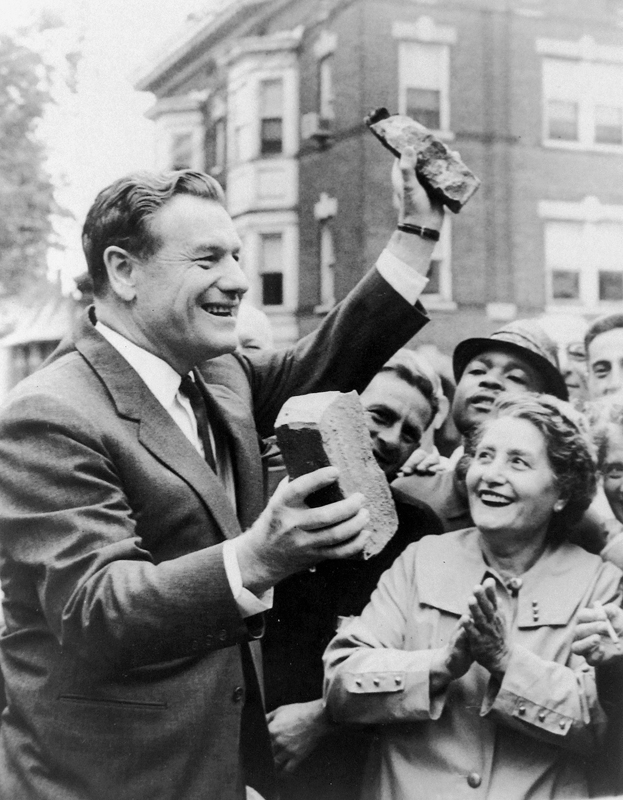
Gov. Rockefeller proudly displays bricks from the first spot demolition in the South Mall project area, July 1962.
Courtesy of the Times Union. Photographed by Bob Paley.
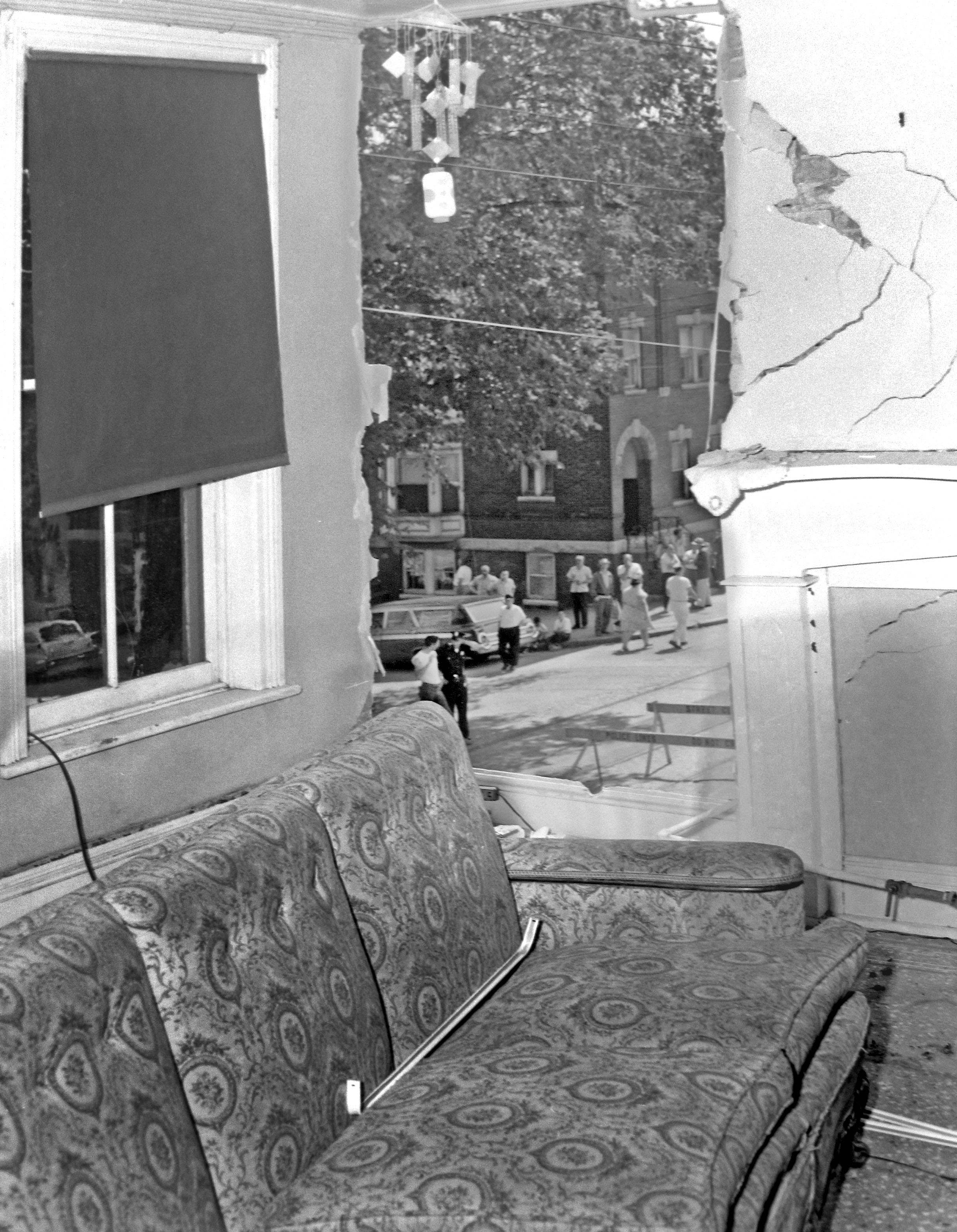
Mrs. Abarca’s living room the day after demolition of the row house next door. Mrs. Abarca's house was not meant to be damaged.
Courtesy of the New York State Archives
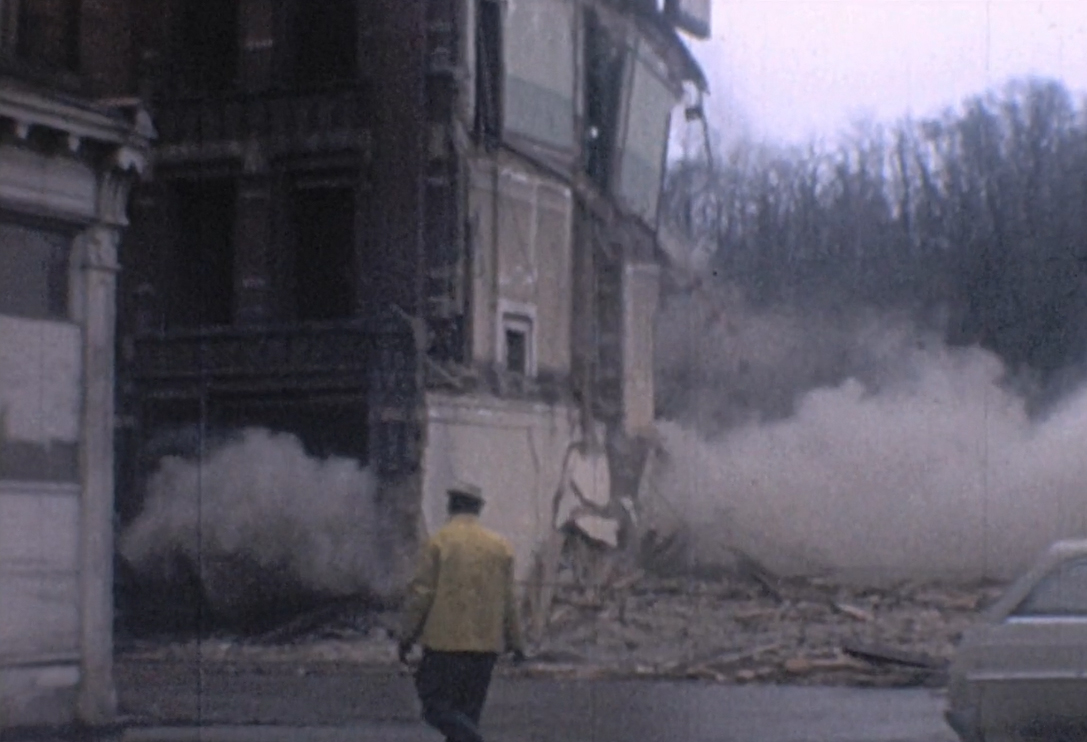
Demolition film of Kingston’s Broadway East project area, 1967.
Courtesy of Bob Haines and Jennifer Haines