Cities across America, including those in New York, experienced rapid changes in the twentieth century. During the Great Depression and World War II, the real estate market ground to a halt. American cities saw little new construction or infrastructure improvements for that 15-year period.
During and after the war, the demographics in American cities began to change as more African Americans and Hispanic immigrants arrived in northern states like New York to take on unskilled jobs in various industries.
Many observers perceived these changes as signs that cities were in a perpetual state of decline. Federal housing official Homer Hoyt explained in 1939: "Usually existing residential structures deteriorate and become obsolete with the passage of time. They are occupied by successive groups of people of lower incomes and lower social standards with the result that the quality of the neighborhood declines with that of the buildings."
Many white residents blamed people of color for neighborhood decline. In fact, the deteriorating conditions in urban housing was due to landlord neglect. Urban building owners across the state were maximizing profits by deferring maintenance and subdividing apartments into more and smaller units.
Elected officials turned to federal urban renewal funds to halt and reverse the perceived decline of city cores. Urban Renewal projects were carried out by mostly white, professional males, while the impact of the process was experienced mostly by poor, working class, people of color.
The hopeful sentiment of people of color affected by these policies was “Do not plan for us, but plan with us,” as quoted in the news story below, but those people were largely ignored over the 25 years of Urban Renewal activities.
How long an urban renewal project remained in the planning phase depended on the willingness of political leaders to carry out the plan. Even in a city like White Plains, with broad support for the program, the planning phase took five years (1960-1965). In Peekskill, on the other hand, no progress occurred for about eight years because of political indifference and inexperience. George M. Raymond’s consulting firm submitted the city’s Comprehensive Development Plan in 1957 and its Workable Program in 1959. No actual progress occurred until 1968 when Mayor Michael J. Dibart took office. George Raymond later testified to Congress that “almost nothing happened for eight years” because the city’s political leadership “had absolutely no interest in the plan.”
Perhaps of all the places in the state, political will mattered most in Albany. Shortly after taking office, Governor Nelson A. Rockefeller decided to build a modernist state office complex between the capitol and the governor’s residence. At the end of March 1962, the state announced the seizure of nearly 100 acres of downtown Albany. While this was not federally funded, it had all the characteristics of a typical urban renewal clearance project–over 1,200 buildings were demolished and 7,000 residents relocated.
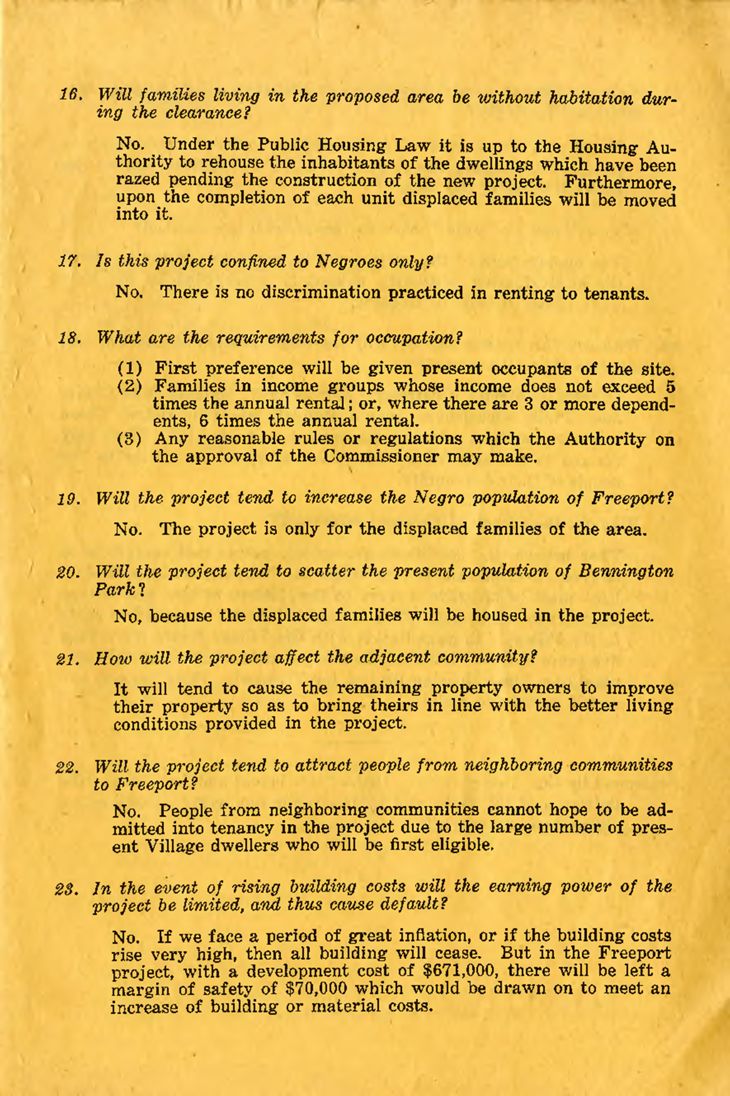
Freeport's Public Housing Project flier was created to build public support for a slum clearance and low-income housing project in Bennington Park. Though this proposal had the support of the Freeport Housing Authority and the local Interfaith Council, voters rejected this initiative on March 19, 1946.
Courtesy of Freeport Memorial Library
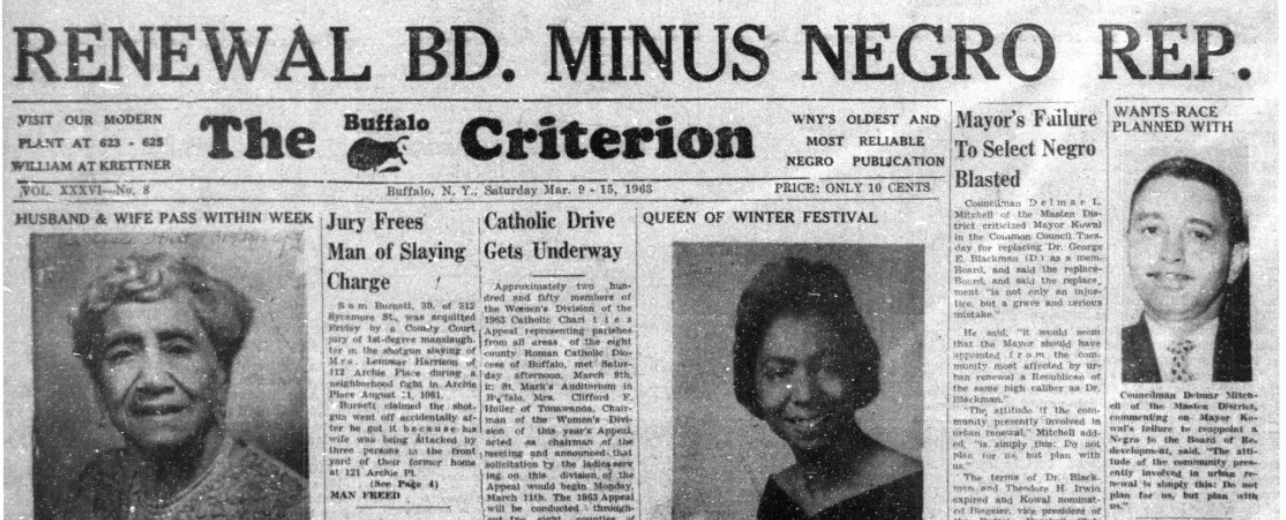
African Americans affected by Urban Renewal policies demanded “Do not plan for us, but plan with us,” as expressed in this news story featuring Councilman Delmar Mitchell, but these sentiments were largely ignored over the 25 years of Urban Renewal activities.
Courtesy of New York State Historic Newspapers
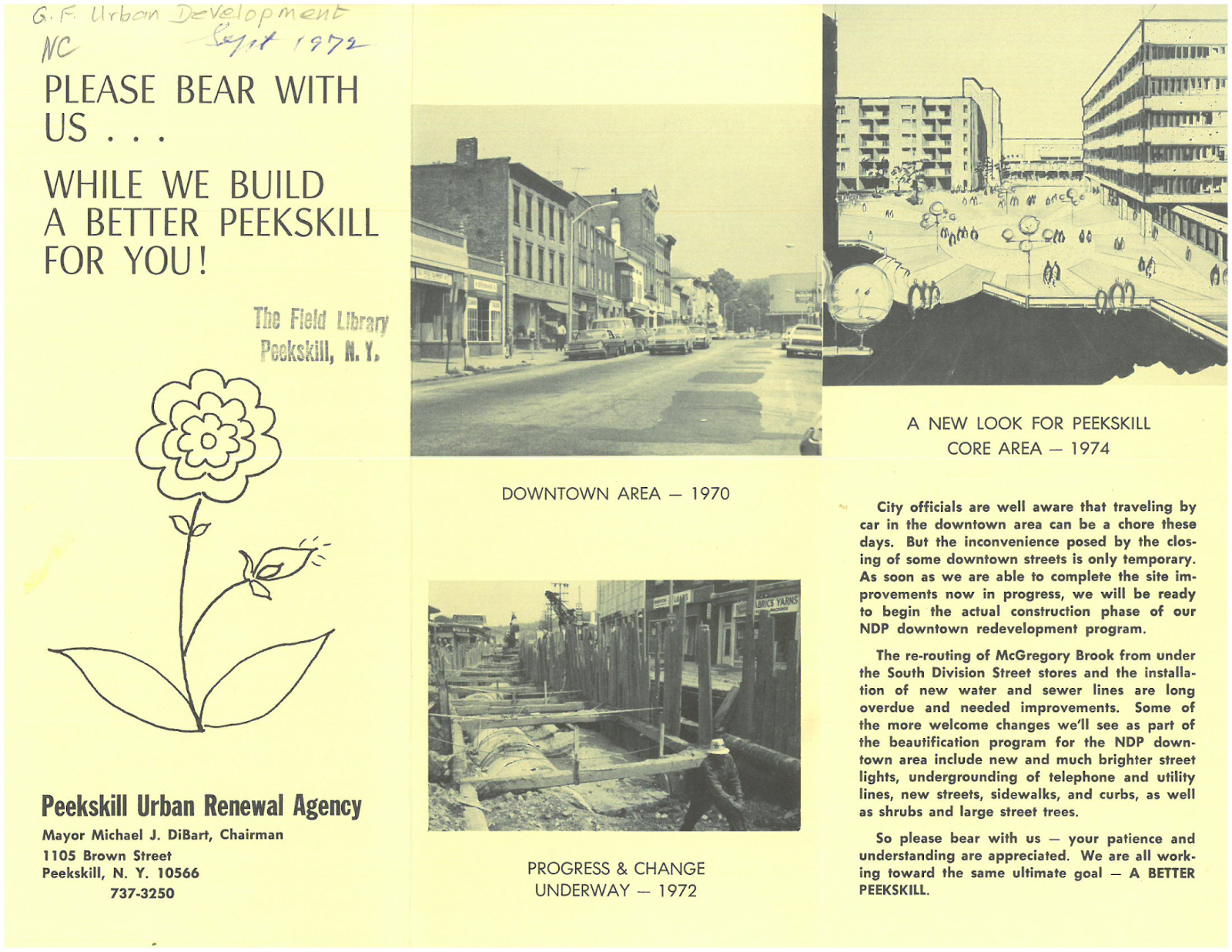
Brochure depicting Peekskill’s urban renewal progress under Mayor Dibart.
Courtesy of Field Public Library
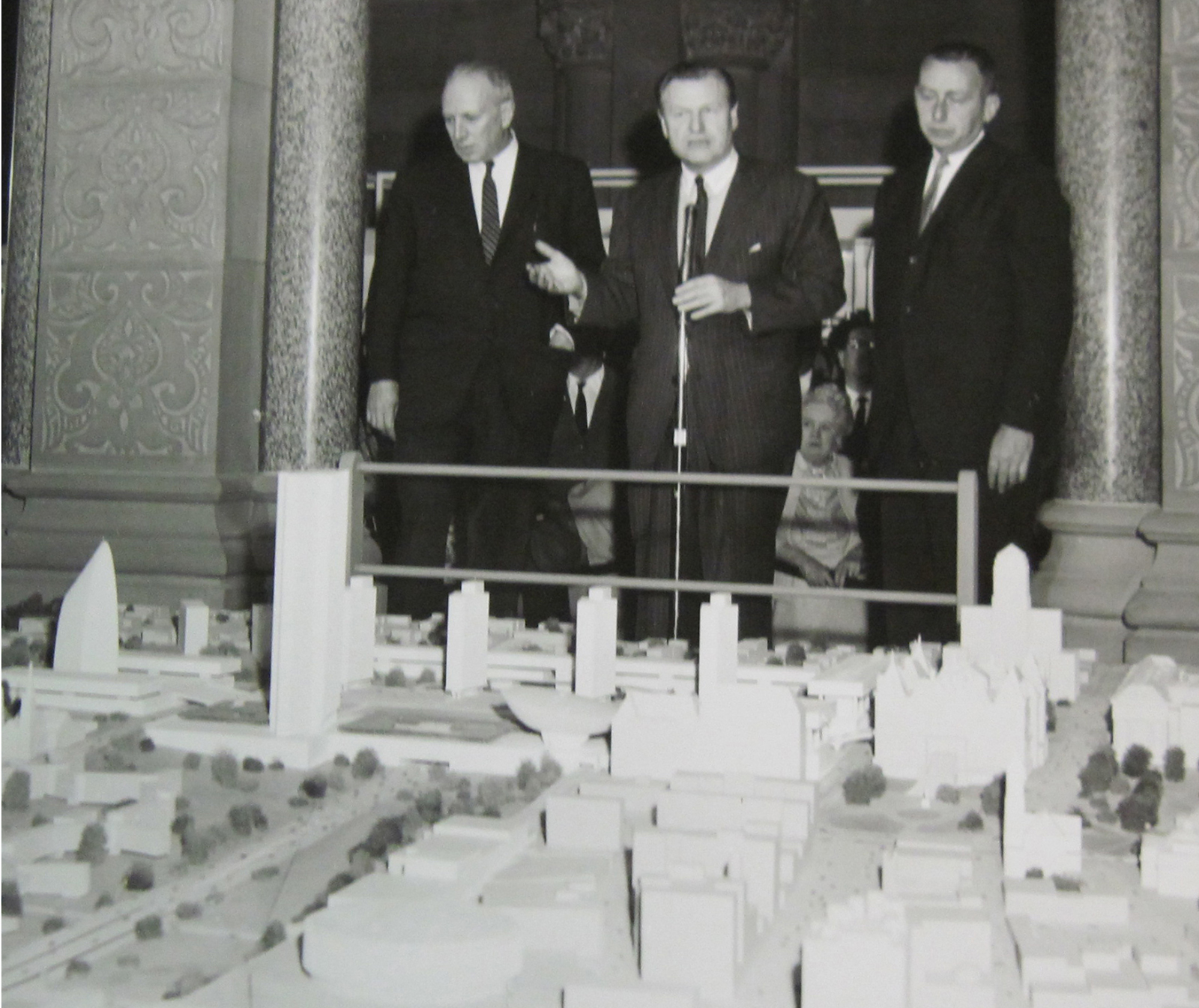
In March 1963 Gov. Rockefeller (center) unveiled the model of the South Mall to Mayor Erastus Corning 2nd (left). Lt. Gov. Malcolm Wilson (right) was also present.
Courtesy of the New York State Archives
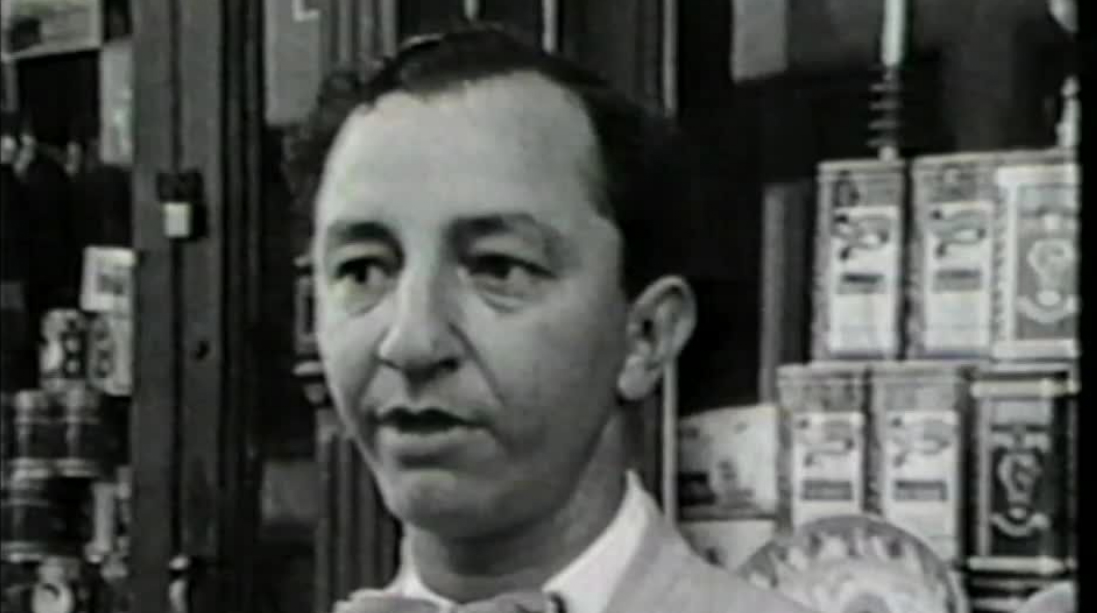
Five interviews with locals in Albany, asking about their opinions on the Urban Renewal plans.
Courtesy of Grant Van Patten.