
Collection Facts
Historical Context
The village of Fayetteville is located in the town of Manlius, which is an eastern suburb of Syracuse in Onondaga County. The village is named after the Marquis de Lafayette, who was considered a national hero in both the United States and France. Throughout the history of Fayetteville, waterways have been important for the village's economy. Limestone Creek and the man-made Ledyard Dyke served as power sources for mills. The Erie Canal, which passes just north of the village, also had an important impact on the development of Fayetteville by tying the region into a larger regional economy. Fayetteville was the site of Stickley furniture company's original factory--a building which currently serves as the home of the Fayetteville Free Library, as well as the Stickley Museum.
Helen E. Davis, known to one and all as Betty, was born in Fayetteville and lived there for all of her 75 years. Her home was at 210 South Manlius Street, near the center of the village. She worked as a crossing guard at the Salt Spring, and Manlius Streets intersections in Fayetteville. Betty also was interested in the history of her community. For several years she researched and wrote an occasional column for the Eagle Bulletin called Sidelights on History. Many of her columns were based on her own recollections. Betty was also a collector, particularly of postcards. Her collection focused on the villages in the immediate vicinity, including Fayetteville, Manlius, Minoa, and Chittenango. She was also interested in the local canals and octagon houses. At her death her postcard collection contained several thousand items, all gleaned from house sales, flea markets, and exchanges with other collectors. Betty was married to Byron Davis and had six children. After her death in 1989 her daughter Deborah, with the assistance of her husband, scanned Betty's postcards of Fayetteville and donated the disk to the Fayetteville Library. The images have been printed, indexed, and annotated for the use of the community and as a memorial tribute to Betty. She is buried in Fayetteville Cemetery.
Scope of Collection
The Fayetteville Free Library Postcard Collection is a representative sample of postcards, featuring historic images of the Fayetteville village streetscape dating back to the early 19th century. This digitization project was inspired by a collection of scanned postcard images donated to the Fayetteville Free Library by the family of Helen E. (Betty) Davis, a member of the Central New York Postcard Club.
Browse similar collections

Collection Facts
Historical Context
The Fay Scrapbooks were assembled by Julie Fay, daughter of William Fay. William Fay was a pioneer radio broadcaster and executive. He became President of the WHAM radio network of Rochester, New York during the mid-20th century and under his leadership WHAM won several awards for excellence and public service.
Scope of Collection
The scrapbooks cover Rochester area radio news and events from 1922-1938, although a lot of the collection is undated. The collection includes: black-and-white photographs, newspaper clippings, correspondence, typed documents, and ephemera.
Browse similar collections

Collection Facts
Historical Context
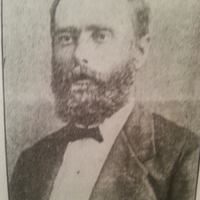
Maurice Farrington (1837-1914) was a Delhi, NY businessman and photographer. His son Frank (1872-1955) ran Farrington’s Drug Store in Delhi and later became the author of several publications and numerous articles related to business practices.
Scope of Collection
These photographs come from the Farrington family of Delhi, New York. The photographs include a number of street views and houses in Delhi, New York. Also included are a number of images of the Frank Farrington home on Elm Street, with pictures of his family. A series of images of a military camp appear to date from 1919 in Camp Lee, Virginia. Some of the photographs in the collection may have been taken by Maurice, particularly the glass plate negatives, but the bulk likely were created after Maurice’s death in 1914.
Browse similar collections

Collection Facts
Historical Context
The Farmingdale-Bethpage Historical Society was founded in 1964. It established a permanent collection of historical materials that includes but is not limited to documents, artifacts, memorabilia, maps, and books that cover the history of the town of Farmingdale.
Scope of Collection
The collection consists of interviews, panels, and discussions held beginning in the 1970s on Farmingdale history spanning from the town’s beginnings. The Farmingdale-Bethpage Historical Society’s purpose for collecting and maintaining these interviews and panels was to preserve the history of the town from the people who had first hand experiences of the topics covered.
Browse within this collection
Browse similar collections

Collection Facts
Historical Context
Farmingdale became an incorporated village in 1904. The Farmingdale Public Library has been a staple of the town since 1923 and since then, has done its best to collect and preserve the history of the town. Since 1904, Farmingdale as a town has seen many changes and not all are documented in print form that are available to the public.
Scope of Collection
Farmingdale Voices was a program created in 2019. The Farmingdale Voices collection consists of oral histories of Farmingdale residents that covers their personal recollections of Farmingdale from their earliest memories of Farmingdale to the present day. Our collection of Farmingdale Voices interviews consists of many different backgrounds, upbringings and experiences within the same town. Local history has become a major area of interest from the residents and the Farmingdale Voices project has not only allowed them to dive into Farmingdale’s history, but has allowed them to aid in the creation of parts of the local history collection.
Creation of these oral histories was supported by a grant from the Long Island Library Resources Council.
Browse within this collection
Browse similar collections

Collection Facts
Scope of Collection
The Farmingdale Veterans History Project was a program created in 2018. The Farmingdale Veterans History Project follows the guidelines and kit made available from the Library of Congress’ Veterans History Project. Farmingdale Public Library’s two Local History Librarians interview veterans about experiences from their lives, with the focus on their wartime experiences and their lives after service. The collection consists of interviews, transcriptions of the interview and any photographs or documents the veteran was willing to share from their service time. Our collection of interviews consists of veterans from World War II, the Korean War and the Vietnam War.
Although many of our veterans have fought in the same wars, no two stories are alike.
Further development of these interviews was supported by a grant from the Long Island Library Resources Council.
Browse within this collection
Browse similar collections

Collection Facts
Historical Context
The Farmingdale Free Library was founded in 1923. It has served as a cultural, recreational, and educational institute since then.
Scope of Collection
This collection consists of photographs & ephemera depicting the history of the Farmingdale Public Library from its former branches to its present location.
Browse within this collection
Browse similar collections

Collection Facts
Historical Context
Farmingdale is an incorporated village on Long Island within the Town of Oyster Bay in Nassau County, New York. The first European settler in the area was Thomas Powell, who arrived in 1687. On October 18, 1695, he purchased a 15-square-mile tract of land from three Native American tribes. This is known as the Bethpage Purchase and includes what is now Farmingdale, as well as Bethpage, Melville, North Massapequa, Old Bethpage, Plainedge, and Plainview. When the LIRR started service to the area in October 1841,it used the name Farmingdale for its latest stop, here, on the line it was building to Greenport. Stagecoaches took people from the Farmingdale station to Islip, Babylon, Patchogue, Oyster Bay South, and West Neck (Huntington area). In 1886 a fire department was organized. The Village of Farmingdale was incorporated in 1904. In 1912, the State Agricultural and Technical school was established. Later, Farmingdale became a locus for the aircraft industry, notably Republic Aviation Company.
Scope of Collection
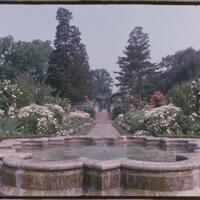
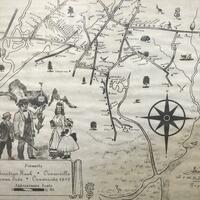
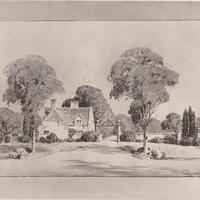
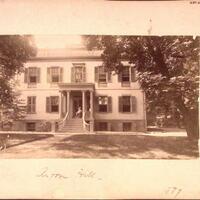
The collection consists of historic photographs and newspaper advertisements of Farmingdale depicting various businesses and roadways.
Browse within this collection
Browse similar collections

Collection Facts
Historical Context
Schoharie County was originally part of Albany county during the eighteenth century. During the Revolutionary War, the county had both families who were Loyalists and families who were Patriots. Many Loyalist families fled to Canada during the war. After the war ended and treaties were signed, Albany County broke off into smaller counties.
Scope of Collection
This collection contains an index of Family Bibles. These images may be searched by family name and are useful for genealogical research.
Browse within this collection
Additional Information
Browse similar collections

Collection Facts
Historical Context
This collection encourages local families to share their family photographs with the larger community.
Scope of Collection
This collection represents a collective cultural heritage of people and places of the upper Hudson Valley and southern Adirondack regions. Family photographs, along with contextual information, are shared by members of Warren, Washington, Saratoga and Hamilton County communities, to be made digitally available to the wider public. The original photographs remain in the possession of the contributors.