
Collection Facts
Scope of Collection
The Hudson River Maritime Museum’s Hudson River Commercial Fishermen’s Oral History Collection consists of interviews with commercial fishermen conducted in the early 1990s. The twenty interviews available here on New York Heritage were digitized through a grant from the Institute of Museum and Library Services. Locations discussed range from New York City to Albany and time periods from the 1920s to the 1990s. The focus of these interviews is primarily on the decline of the commercial fishing industry, including changes in fishing techniques and gear, changes in water quality and pollution, economic and market changes, and changes in fishing populations, including government regulation.
Content note: Some of the terminology used in these interviews reflects the time period and personalities of the people being interviewed and not that of the Hudson River Maritime Museum or New York Heritage.
You can learn more about one of our interviewees, Thomas Turck, by visiting Turning Tides: A Hudson River Fish Tale, a story of the American Shad fishery in New York's Hudson River. Dedicated to the memory of Thomas J. Turck. Created by Daniel Douglas.
The full collection of Hudson River Commercial Fishermen Oral Histories can be found at the National Oceanic and Atmospheric Administration (NOAA) website.
Browse within this collection
Browse similar collections

Collection Facts
Historical Context
North Country Community College is the only public college located in the Adirondack Park. NCCC was founded in 1967 in Saranac Lake, New York.
Scope of Collection
This collection consists of transcripts of four interviews, all conducted in 2006 by Shir Filler, with former faculty members and administrators of North Country Community College.
Browse similar collections

Collection Facts
Historical Context
The State University of New York at Oswego was originally known as Oswego Normal School, which was founded in 1861. It became part of the SUNY system in 1948. From 1922 through 1926 the yearbook was called The Normalian. In 1927 it became known as The Ontarian. The Ontarian was not published in 1972, 2003, or 2004 and was discontinued after the 2005 edition.
Scope of Collection
The collection includes SUNY Oswego yearbooks from the years 1922 through 2005.
Browse within this collection
Browse similar collections

Collection Facts
Historical Context
Onondaga Park was purchased by the City of Syracuse on July 27th, 1898. Prominent landscape architect George Kessler designed portions of the park. Located south of downtown Syracuse, the park consists of a lower portion and upper portion which are connected via a parkway. The Upper Onondaga Park is home to Hiawatha Lake, a manmade lake which was once used as a community swimming pool. Notable park features include: a stone bridge, a gazebo, fountains, grottos, and a neoclassical greenhouse. The Onondaga Parks are popular for sports and recreation in the community.
Scope of Collection
The collection consists of postcards depicting Onondaga Park and its features in the early to mid-20th century. A limited number are black-and-white photographic postcards, but most are color illustrations. Many postcards were mailed and have handwritten messages on the back.
Browse within this collection
Browse similar collections

Collection Facts
Scope of Collection
Onondaga Community College Yearbooks date between 1964 and 1975, documenting student life at the college. The yearbook is titled The Chieftain.
Browse within this collection
Browse similar collections

Collection Facts
Historical Context
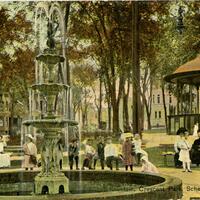
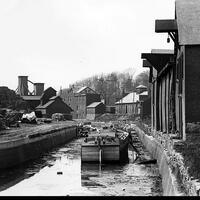
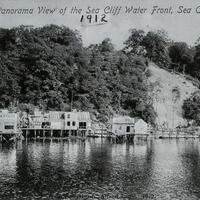
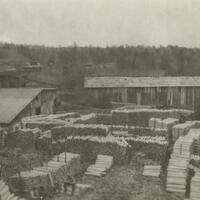
In the mid-19th century, the Delaware and Hudson Railroad reached Oneonta, stimulating development as a railroad center and attracting new industries. Oneonta was once home to the largest locomotive roundhouse in the world. Dr. Eugene Milener was the Oneonta City Historian and author of "Oneonta: The Development of a Railroad Town." Published in 1983, the book covers the period of time from the arrival of the first settlers in the 1770s to about 1930, just before the city's railroad period began its decline.
Scope of Collection
Materials from the Milener collection include street maps from 1785 through 1910, many photographs of local railroads, trolleys, city scenes, and correspondence regarding the choice of Oneonta as a site for the Delaware and Hudson Railway Company's Engine House and shops.
Browse within this collection
Browse similar collections

Collection Facts
Historical Context
The territory which embraces the town and city of Oneonta was once the site of Indian villages, one at the mouth of the Charlotte Creek and the other at the juncture of the Susquehanna River and Otego Creek. Following along the present day Main Street ran the great Indian trail which was the "highway" between the Great Lakes, New England and the Hudson. The town of Oneonta was organized in 1830 from parts of Otego and Milford and had a population of 1,149. The village of Oneonta was incorporated in 1848. In 1865, the Albany and Susquehanna Railroad, predecessor of the Delaware and Hudson Railroad, reached Oneonta, accelerating the growth of the community. With the construction of the D&H machine and repair shops in 1871, development occurred at an even more rapid pace. On January 1, 1909, the village of Oneonta became a city. The population had grown from 2,600 in 1875 to 10,000 by 1912, and 12,000 by the 1920's. By the 1950's, the automobile and trucking industries were taking their toll on the railroad, and operations of the Delaware and Hudson began to wane. The D&H Railroad gradually reduced its operations in Oneonta, and was finally bought out by the Canadian Pacific in January 1991. Oneonta is now a college town. The State University of New York at Oneonta and Hartwick College provide a means of livelihood for a large number of Oneonta residents.
Scope of Collection
Directory of Oneonta for 1901-1902: a classified business directory and householder's street directory together with a compendium of the village government, institutions, incorporated companies, societies, miscellaneous organizations, etc.
Browse similar collections

Collection Facts
Historical Context
Oneida High School can trace its roots to the formation of a union free school district in 1882. Classes were held for many years in the elementary school on Elizabeth Street. The district's first high school building, with 10 classrooms as well as a third-floor auditorium and a basement "manual training" room, was constructed at 457 Main Street in 1903. When the new "state-of-the-art" high school at 452 Elizabeth Street opened in 1928, across the field from the old building, the old high school reverted to a junior high school. The two buildings were later connected by a tunnel.
By 1926 Oneida's union free school district had legally been converted into a city school district. The city district included only the Inner (or inside tax) District of Oneida. Students in the Outer District were divided among smaller or adjacent town school districts. The Kenwood section of Oneida, for example, became part of the newly formed Vernon-Verona-Sherrill Central School District in 1950.
After rejecting the proposal in 1954, the voters of Oneida turned around in 1955 to approve the creation of a consolidated city school district. The new city district absorbed the Crescent Valley, Dry Dock, Country Club and Mount Hope school districts within the city limits plus the outlying districts of Durhamville, Lenox Furnace, Oneida Castle, Oneida Valley, Sconondoa and Wampsville. Meanwhile, Sylvan Beach's junior and senior high students attended the Oneida High School. The merger led to new construction and expansion of district facilities. Oneida High School moved into its present building on Seneca Street in Oneida in 1959.
Source: David H. Alvord, Oneida , New York: A Bit of America at Its Best (2001).
Scope of Collection
Yearbooks from Oneida City High School, from 1936 - 2018. Several "Senior Annual" publications are also included.
Browse similar collections

Collection Facts
Historical Context
The abolitionist movement began in Oneida County in the 1830s when anti-slavery societies were formed and the Underground Railroad made its way to the region. Petitions from the citizens of Oneida County’s townships to the United States government protest the continuation and expansion of slavery. From 1834 to 1854, these local petitions called for the end of slavery, the slave trade, and the institution’s expansion into the newly acquired Nebraska, Florida, and Texas territories. Additionally, the petitioners called for the reinstatement of the Missouri Compromise after its 1854 repeal in favor of the Kansas-Nebraska Act (1854). The Emancipation Proclamation and ratification of the Thirteenth Amendment in 1865 formally abolished slavery.
Scope of Collection
This collection includes digitized copies of petitions from the towns of Annsville, Augusta, Ava, Camden, Clinton, Deerfield, Florence, Floyd, Holland Patent, Kirkland, Lee, Marcy, Marshall, New Hartford, New York Mills, Oneida, Paris, Rome, Sangerfield, Steuben, Trenton, Utica, Vernon, Verona, Vienna, Western, and Whitestown. The original documents may be found at the National Archives in Washington D.C.
Browse similar collections


Collection Facts
Historical Context
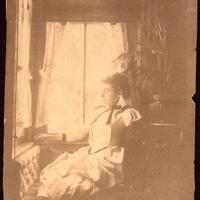
Olin Dows (1904-1981) was a famed artist from Rhinebeck, NY. Dows studied at Harvard University and the Yale School of Fine Arts and, significantly, spent the summer of 1929 in Mexico where he met with such luminaries as Diego Rivera and Dr. Atl. In the early-1930’s, Dows became involved in Federal relief efforts for the arts through his connection to Franklin D. Roosevelt. He was appointed Director of the Treasury Relief Art Project, funded by the Works Progress Administration in 1935. Dows was commissioned to paint a series of murals in the Rhinebeck Post Office in 1939, and in 1941, at the suggestion of President Roosevelt, he painted the murals in the Hyde Park Post Office as well.
Scope of Collection
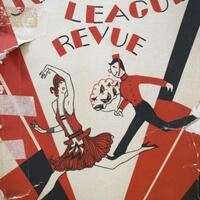
This collection contains photographs depicting the work of Olin Dows.