
Collection Facts
Historical Context
Camp Upton was built in 1917 as an induction and training facility for new soldiers who were to fight in World War I. The camp was named after Major General Emory Upton, a Union general in the Civil War. Between World War I and II, the camp was used by members of the Civilian Conservation Corps. Many of the trees on the site were planted by these men. The camp was reopened in 1940, on the eve of World War II, serving its original purpose as a military training ground.
Scope of Collection
The collection consists of postcards depicting Camp Upton as well as general postcards of the Western Front as seen by the average Dough Boy.
Browse within this collection
Browse similar collections

Collection Facts
Historical Context
Established in May 1917, Camp Syracuse was located on the New York State Fairgrounds, approximately 4 miles from the city. Starting as a mobilization camp, elements of 9th and 16th infantry, as well as the 5th Machine Gun Battalion were processed and stationed there to operate the camp. In the summer of 1918, it was reestablished as a recruitment camp for “special and limited service” men (i.e. soldiers who were - for some reason or another - not qualified for “full duty”). These limited service soldiers were often assigned to fire and guard duty on both military and non-military sites, such as harbors, bridges, or factories, with many assigned to guard the Erie Canal. The military organization of the recruitment camp consisted of companies G, K, and M of the 22nd infantry, as well as a detachment of the Quartermaster Corps and a detachment of the Medical Department. While temporary in nature, the camp saw more than 30,000 troops moving through its facilities during the course of the United States’ involvement in World War I. The camp closed sometime after November 1918, following the end of the War and the influenza outbreak that swept through the camp in the fall of that year.
The camp borders the Village of Solvay and Town of Geddes, located off the western shore of Onondaga Lake. Solvay was named for the Solvay Process Company which established a Solvay process facility there in the late 19th century. The Town of Geddes is named for James Geddes, a prominent early settler of Onondaga County who helped develop the local salt industry.
Scope of Collection
This collection contains a number of large black-and-white photographs, including panorama views, depicting the various divisions of troops stationed at the camp. Other photographs in the collection document local buildings and people from Solvay and Geddes in the late-19th and early-20th centuries
Browse within this collection
Browse similar collections

Collection Facts
Historical Context
Camp Russell was opened in 1918 following the donation of 15 acres of land by Samuel Russell, a businessman and industrialist from Ilion, NY. The property was situated on White Lake, in the town of Woodgate in the southwestern Adirondack Mountains. In 1919, the camp’s dining hall was built following another donation by Samuel Russell. The camp initially served Boy Scouts from the Utica, Rome, and Ilion Scout Councils.
In 1920, the Utica Council took over camp operations, although Scouts from the other councils continued to attend Camp Russell. Three years later, follow another land donation from Samuel Russell, the camp grew to 25 acres. The camp’s footprint on White Lake continued to grow with donations of land from Russell’s children following his death in 1929 and again in 1957. It eventually encompassed nearly 400 acres.
From 1927 to 1939, the newly formed Herkimer County Council (which became the General Herkimer Council in 1934) and the Utica Council (which became the Upper Mohawk Council in 1938) jointly ran Camp Russell. In 1939, the Upper Mohawk Council announced that it would be leaving Camp Russell to start its own camp. From that time, until the merger of the General Herkimer and Land of the Oneidas Councils, which created the Revolutionary Trails Council in 2001, the General Herkimer council owned and operated Camp Russell.
Several of the camp’s original buildings, including the “Brown House,” also known as La Maison de DeVito, nicknamed for Frank DeVito, a member of the staff from 1927–1999, still remain. The contents of this collection were housed in the Brown House which operated as the Camp Russell Museum and housing for senior staff on the second floor.
With declining enrollments in Scouting nationwide and in Central New York in particular, the Revolutionary Trails Council executive board decided to sell the camp in 2014. Summer 2015 was Camp Russell’s last camping season, although the property remained accessible to Scouts until its sale in 2017.
Scope of Collection
The Camp Russell Boy Scout Collection contains items that were housed in the Camp Russell Museum, with some dating back to the camp’s earliest years. These include photographs, newsletters, administrative documents, newspaper clippings, scrapbooks, patches, neckerchiefs, coffee mugs and other camp memorabilia, national jamboree flags and memorabilia, national flags and international Scout uniforms donated by international staff who worked at Camp Russell. Also within the collection are items donated by several lifelong Scouters.
Browse within this collection
Browse similar collections

Collection Facts
Historical Context
Camp Mills was a World War I military installation located in Mineola, New York. Named after Major General Albert L. Mills, it is recognized as the birthplace of the elite 42nd Infantry of the National Guard, better known as the “Rainbow Division.” Initially established as a temporary camp in September 1917, it soon became the largest training center for American expedition forces and an active port of embarkation for troops in transit to France. Camp Mills was utilized as such until Armistice Day, November 11, 1918, when it was converted to a port of debarkation where garrison troops were stationed upon returning from Europe. Post-war operations continued until March 31, 1920, and in 1938 it was incorporated into Mitchel Air Force Base, which was later decommissioned in 1961. (Note: The land that Camp Mills was built on is now part of the village of Garden City.)
Scope of Collection
The collection is comprised of sixty-one 2 5/8” x 4 3/8” and six 3 1/8” x 5 1/2” black-and-white photographs taken by an unknown WWI soldier in the Quartermaster Corps. The photos were taken between January and April of 1919, when Camp Mills was used as a post-war port of debarkation. They depict daily life at the camp, and contain annotations on the versos.
Browse within this collection
Browse similar collections

Collection Facts
Historical Context
Calvin Coolidge, the 30th President of the United States, spent the summer of 1926 at White Pine Camp in Paul Smiths, New York. The camp was originally constructed in 1907 and was eventually donated to Paul Smith’s College to be used as student housing.
Scope of Collection
The collection contains a number of photographs of President Calvin Coolidge and others during his stay at White Pine Camp in the summer of 1926. Included in the collection are photographs with the president alongside his wife, Mrs. Grace Coolidge, as well as other members of his administration, such as Secretaries Herbert Hoover, Owen D. Young, and Frank Kellogg, as well as other prominent government leaders such as New York Governor Al Smith. Also included are images of contingents of Marines, companies of Vaudeville performers, and members of the AFL.
Browse within this collection
Browse similar collections

Collection Facts
Scope of Collection
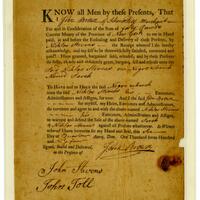
The Caldwell Family Collection contains documents and letters related to the family of John Caldwell Senior (b. 1742), who immigrated to the United States from County Antrim, Ireland and settled in Salisbury Mills, Orange County New York in 1799. Authors include Andrew J. Caldwell (1782 – 1862), Maria Caldwell, and other members and acquaintances of the Caldwell Family. These materials have been digitized thanks in part to funding provided by the Quassaick Chapter, D.A.R.
Browse within this collection
Browse similar collections

Collection Facts
Historical Context
Salvatore Calderone (1878-1929) and his son, Dr. Frank Calderone (1901-1987), were visionary theatre operators in Nassau County, N.Y. (Dr. Calderone was also a noted physician and health officer.) Their Calderone theatre circuit brought quality entertainment—in the form of live stage shows and films—to the area for decades. Salvatore was noted as being the "Master Showman of Nassau County. By 1927, the Calderone chain operated more than half-a-dozen theatres in Nassau County, including two in Hempstead, one in Lynbrook, one in Valley Stream, one in Glen Cove, one in Westbury, and one in Mineola. Calderone soon became "...a powerful figure in the theatrical field...," and acted as the guiding hand behind the chain.
Scope of Collection
The Calderone Theatre Collection consists of historic photographs of the various chain theaters throughout Long Island. Photographs include construction, grand openings, operations, portraits, and interior and exterior views.
Browse within this collection
Browse similar collections

Collection Facts
Historical Context
The mission of the Cairo Public Library is to provide the Cairo community with access to a balanced collection of books and other materials to serve their educational, cultural and recreational needs.
Scope of Collection
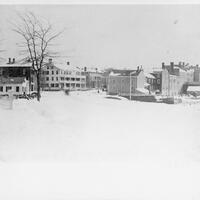
This collection includes images from Cairo, NY including locations such as Jennings Hotel, Main Street, the race track and the railroad station.
Address:
15 Railroad Ave
P.O. Box 720
Cairo, NY 12413-0720
Phone: 518-622-9874
https://cairolibrary.org/
Browse within this collection
Browse similar collections

Collection Facts
Historical Context
William Butler was born in 1831 in New Castle, Ireland. He was the fourth-youngest son of Edward
Butler of Bohernagaul, in the County of Tipperary. At the age of thirteen, Butler was apprenticed to merchant James Leara, of Clonmel, for seven years. By 1859, Butler had immigrated to the United States and settled in New York City. Through his letters, it is known that he had two brothers and a sister also living in New York in the 1860s. On March 1, 1859, he enlisted in the 69th Regiment of the New York Militia as a lieutenant. He was discharged in August, but re-enlisted as a captain in November. He was discharged again in September 1862 but re-enlisted the following month. Butler eventually achieved the rank of a Major. He was wounded in a battle near Petersburg, VA on June 16, 1864. Butler died in August 1864 in a United States Hospital in Annapolis, MD.
Scope of Collection
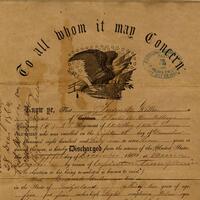
The collection consists primarily of correspondence between William Butler and his family during the Civil War. His letters began in 1861 when he was sailing to Annapolis on a troop ship and continue until his death in August 1864. Some months he wrote almost daily while others he wrote sporadically. His letters document the everyday concerns of a Civil War soldier including life, death, health, clothing, money and liquor. The majority of the letters are written to William’s brother Edmund with his other brother James and his sister Margaret appearing occasionally. Included are his Certificate of Commission as a 1st Lieutenant and his letter of discharge from 1862.
Browse within this collection
Browse similar collections

Collection Facts
Scope of Collection
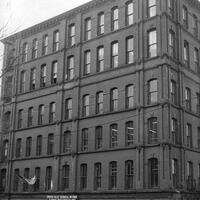
This is a collection of black and white photographs of a wide variety of business enterprises in Albany, NY. They range from restaurants, to banks, to warehouses; many were founded and built in the 19th century. The dates of the photographs ranges from the mid-1800s to the mid-1900s. These photographs provide not only a look into Albany’s past economic life, but also show snapshots of architecture and everyday life. People, automobiles, and occasionally animals feature in these photographs. Many of these buildings are no longer standing, making these photographs rare glimpses back into this period of Albany’s history. Many of these businesses were or are Albany institutions known locally, regionally, nationally, and globally.