Cattaraugus Creek
The rocks exposed along Cattaraugus Creek date to the late Devonian Period (about 365 million years ago) when the area lay under a shallow warm sea and was part of a large deltaic system called the Catskill Delta. As occurs with present day deltaic systems, like those found in the Gulf of Mexico, rivers flowing into this ancient sea carried sand, silt, and clay to be deposited as thick layers of sediment. At the same time organic material from the abundant sea life was also accumulating. Over millions of years these materials became compressed into massive layers of sedimentary rocks we see exposed along Cattaraugus Creek.
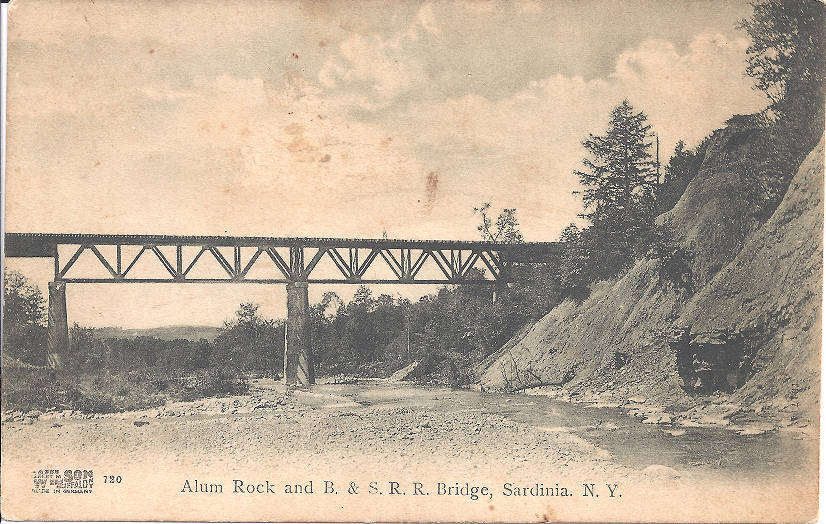
Buffalo & Susquehanna Railroad Bridge over Cattaraugus Creek, undated
Image source: Sardinia Historical Society found in New York Heritage: https://nyheritage.contentdm.oclc.org/digital/collection/BUF005/id/78/rec/92
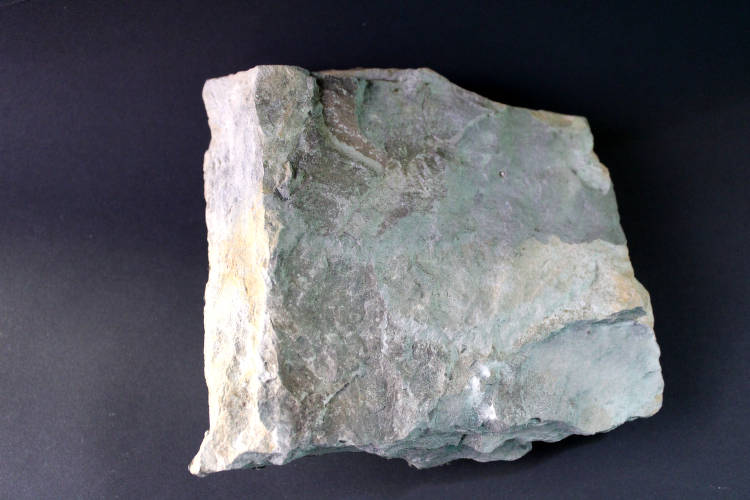
Specimen of Gowanda shale
Gowanda shale is brittle and less stable than many of the rock formations in our region. Cliffs of Gowanda Shale, like those in Zoar Valley are unexpectedly unstable.
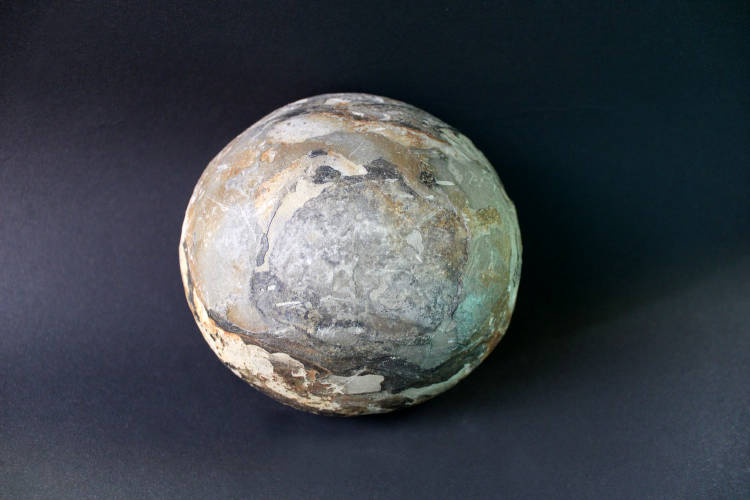
Concretion of Gowanda shale
A concretion is formed through the precipitation of the minerals resulting in a hard compact mass that is often spherical in shape.
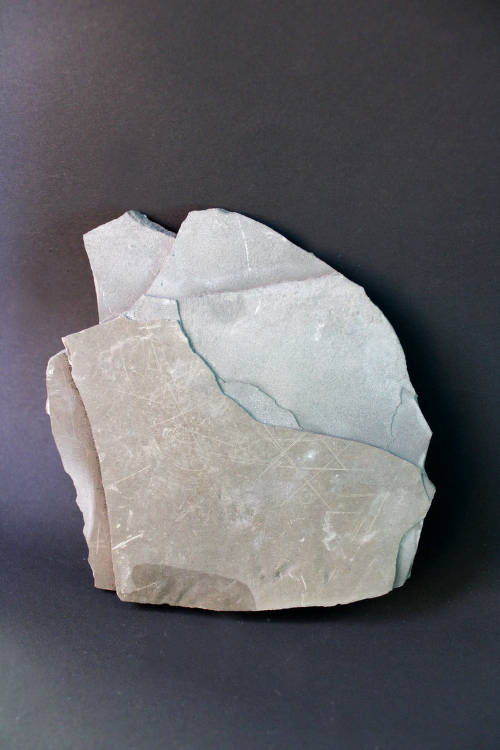
Sample of Dunkirk shale
In this olive-gray shale, you can find small pieces of pyrite (often called fool’s gold), or fossils of an extinct vertebrate known as a conodont. Conodont elements are parts of the animal’s mouth structure and superficially look like teeth.
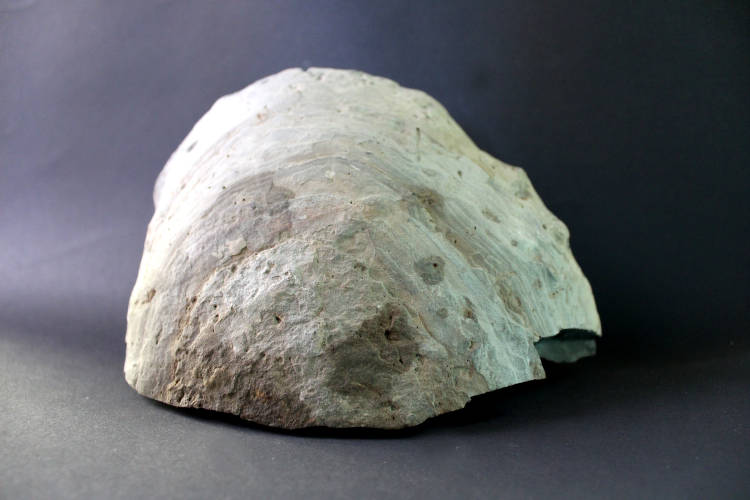
Another specimen of Dunkirk shale
Shale is sedimentary rock composed of fine-grained mud and clay. Shale is characterized by breaks or parallel layering that causes it to split into thin sheets, this is known as fissility.
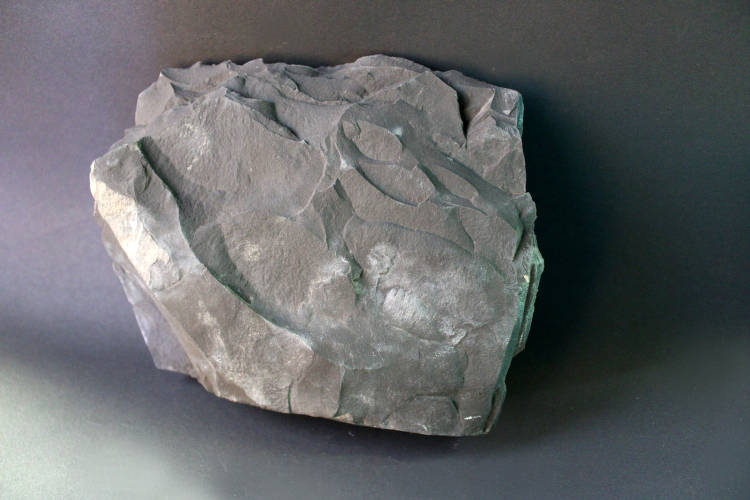
Hanover shale
Hanover Shale, like all shale, was formed under the sea, therefore, it contains lots of marine animal fossils.
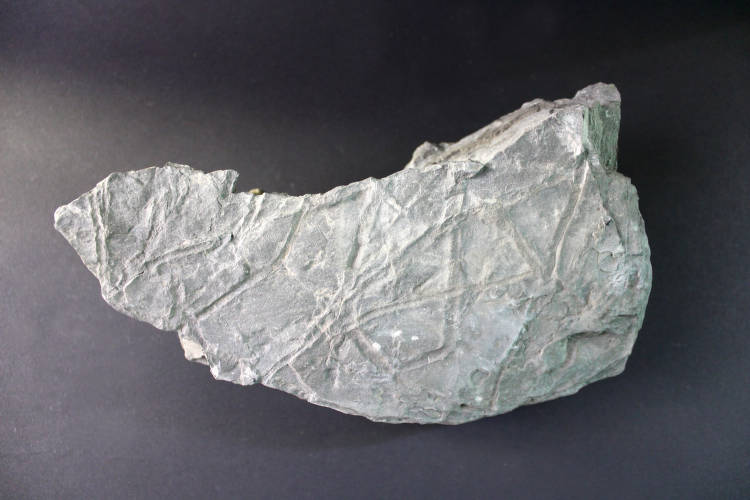
Another example of Hanover shale
Check out the Eternal Flame at Chestnut Ridge Park in North Boston, NY! This natural gas emission was formed in the Hanover Shale!
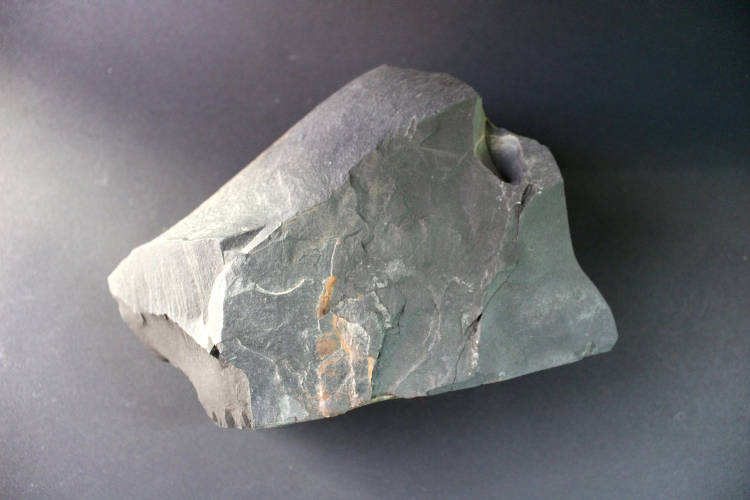
Pipe Creek shale
Part of the Java Formation, the Pipe Creek shale is a very thin unit (less than 25 ft thick), but it is widespread and can be found in New York, Pennsylvania, Ohio, West Virginia, Kentucky, and Tennessee.
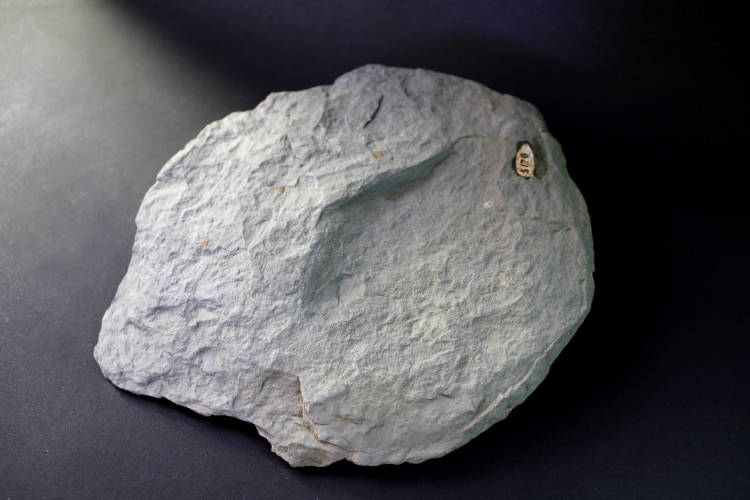
Angola Shale
This member of the West Falls Formation contains shale mixed with mudstone, siltstone, and even sandstone, indicating that it was deposited in an underwater basin.
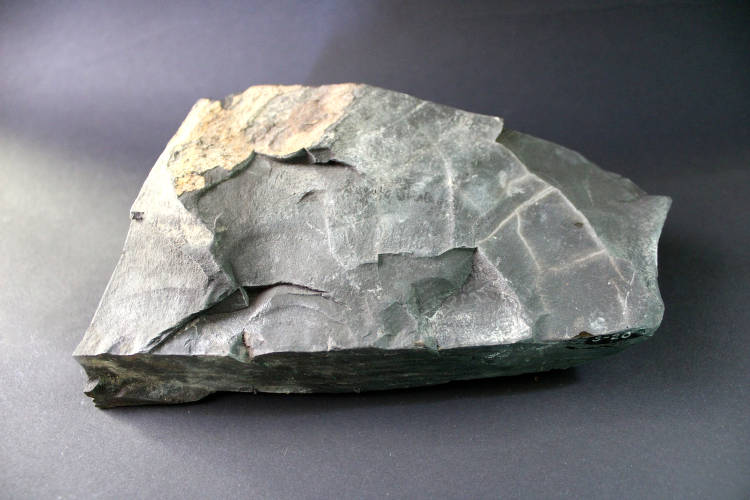
Another specimen of Angola shale
The fine-grained clay that makes up the Angola Shale has been used in Western New York to make brick and other clay products.