How did local, state, and federal policymakers and government leaders manage to convince their constituents that Urban Renewal was good for everyone? The common message was that Urban Renewal would revive downtown by attracting back white middle class traditional families. In the midst of widespread urban unrest, these images were meant to reassure viewers that revitalized cities would be safe, lively, and interesting.
Typical public-relations approaches were to display futuristic model cities in public places or disseminate brochures, contrasting carefully curated images of so-called “urban blight” with depictions of a new, clean, futuristic, renewed city.
For example, in New York City, Robert Moses and the Committee on Slum Clearance often used photographs contrasting the old and shabby (clothes on clothes lines being a particular favorite) with the new, modern construction that would rise in its stead.
By law, any municipality taking federal Urban Renewal funds had to hold at least two public hearings, the first before the community’s planning board and the second before the legislative body.
In theory, the purpose of these hearings was to gather public input. In practice, however, these hearings were opportunities for city officials to further build the case for renewal. Municipal planners would often enlist civic groups like the local chamber of commerce or fraternal organizations like the Lions Club in support of their Urban Renewal visions.
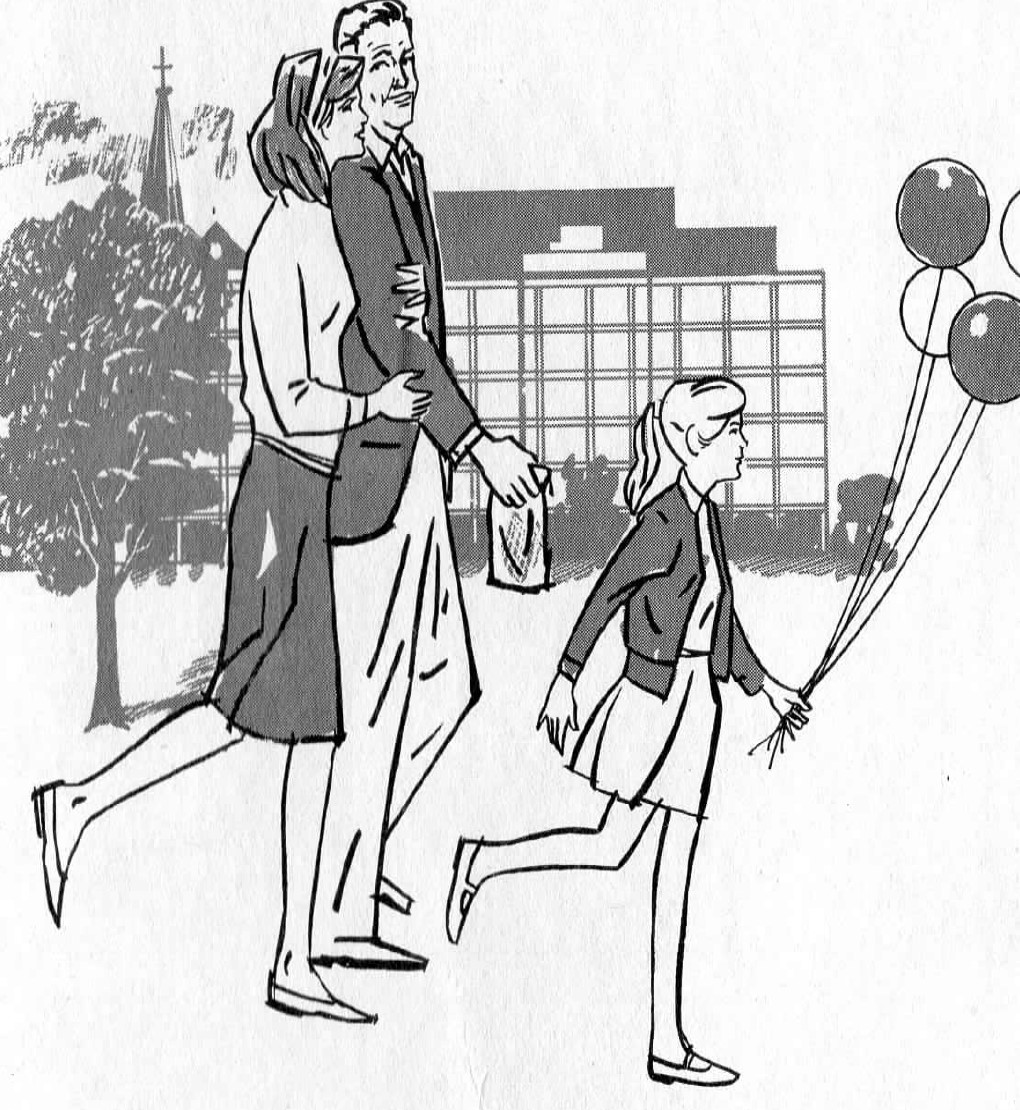
From a pamphlet distributed by the U.S. Department of Housing and Urban Development, “The Workable Program for Community Improvement,” 1966.
Courtesy of the Mechanicville Urban Renewal Agency Records
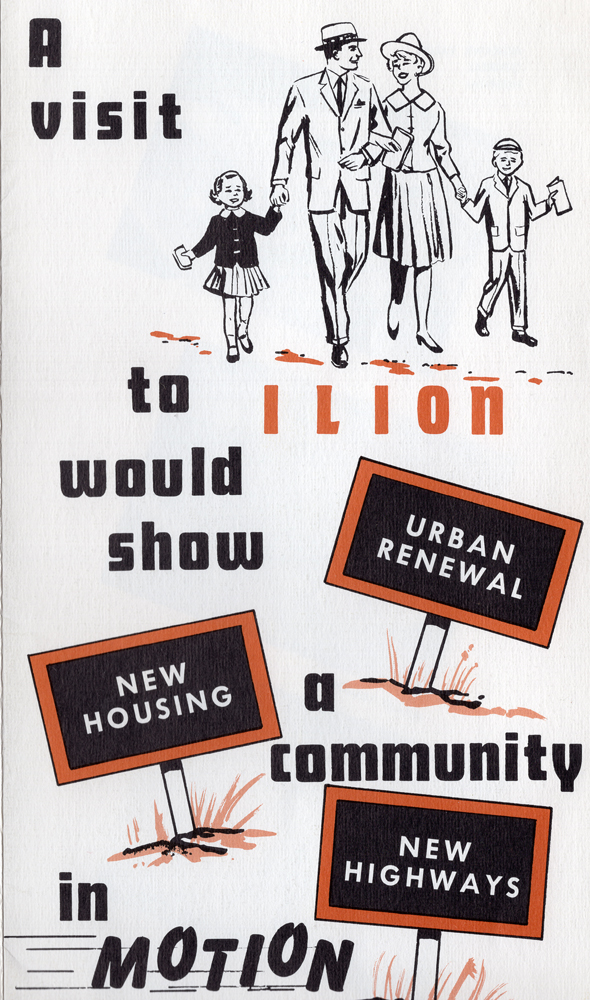
A pamphlet promoting Urban Renewal in the small Mohawk Valley village of Ilion.
Courtesy of the Ilion Free Public Library
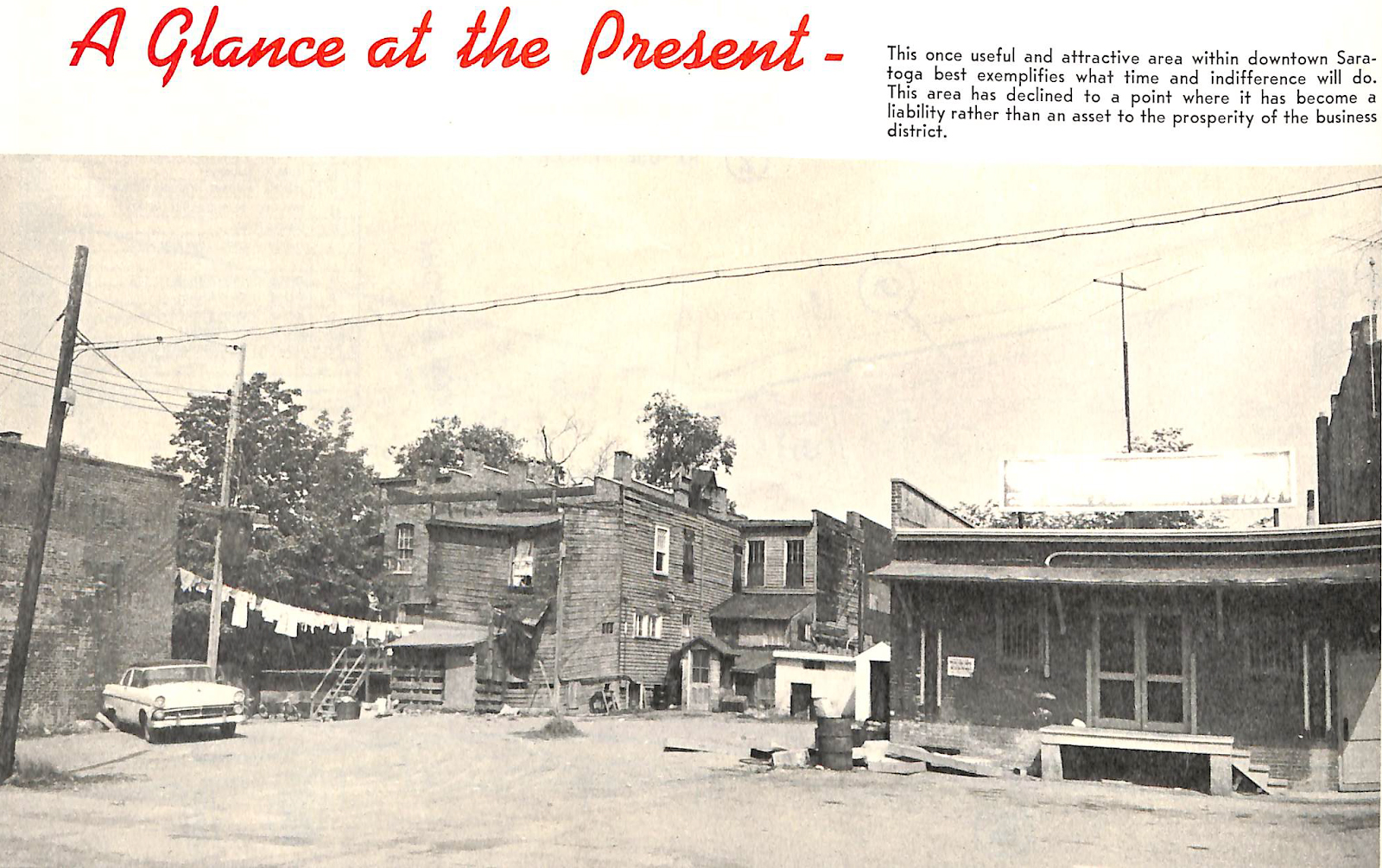
This page from a brochure from Saratoga Springs strategically showing a deteriorating house with a line of laundry.
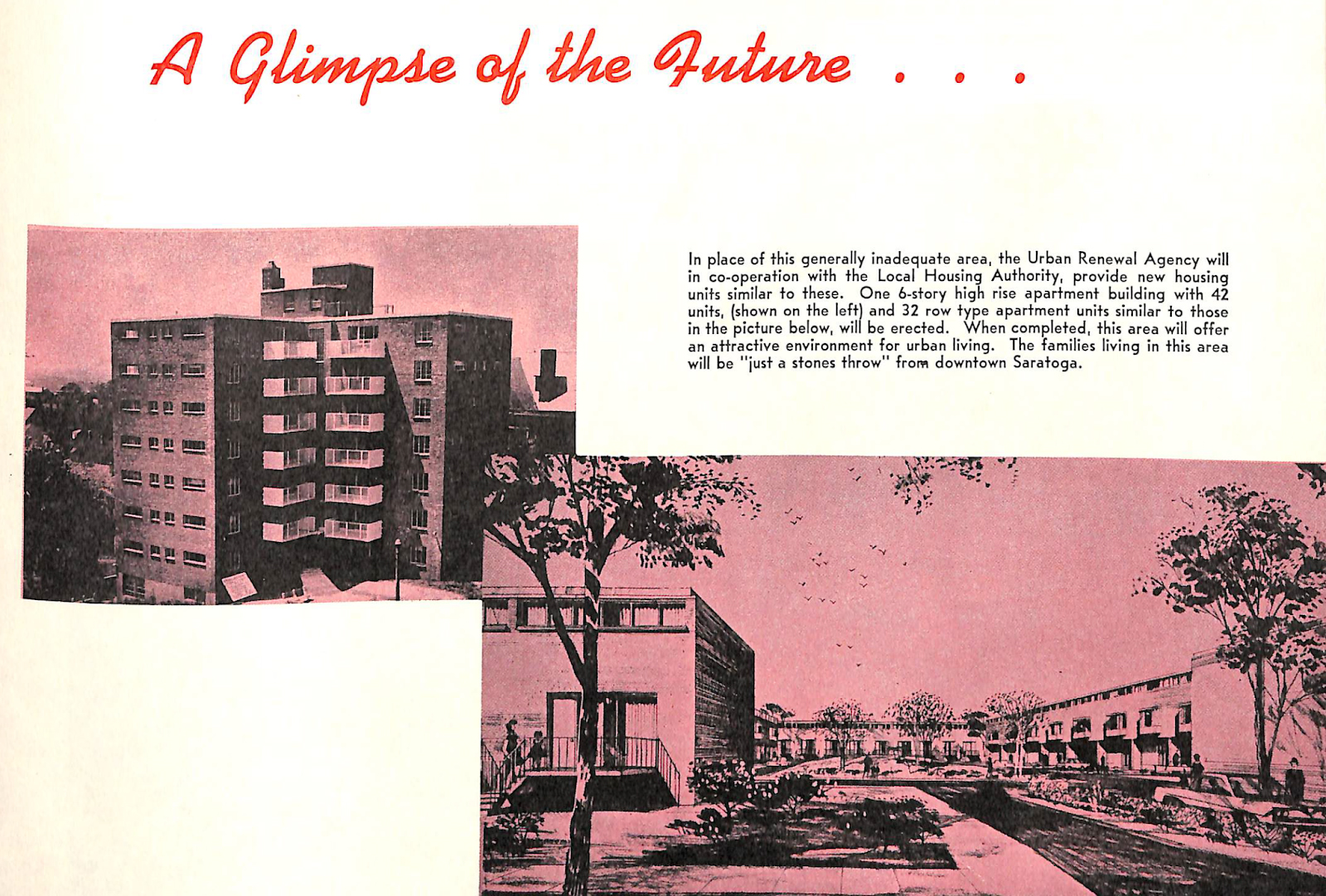
Saratoga Springs and many other cities in New York adopted similar approaches in the use of promotional brochures and expensive models that were built to show what might be built if a developer and architect could be found to carry out these visions. Completed Urban Renewal projects rarely–if ever–looked like these models or what was seen in the literature.
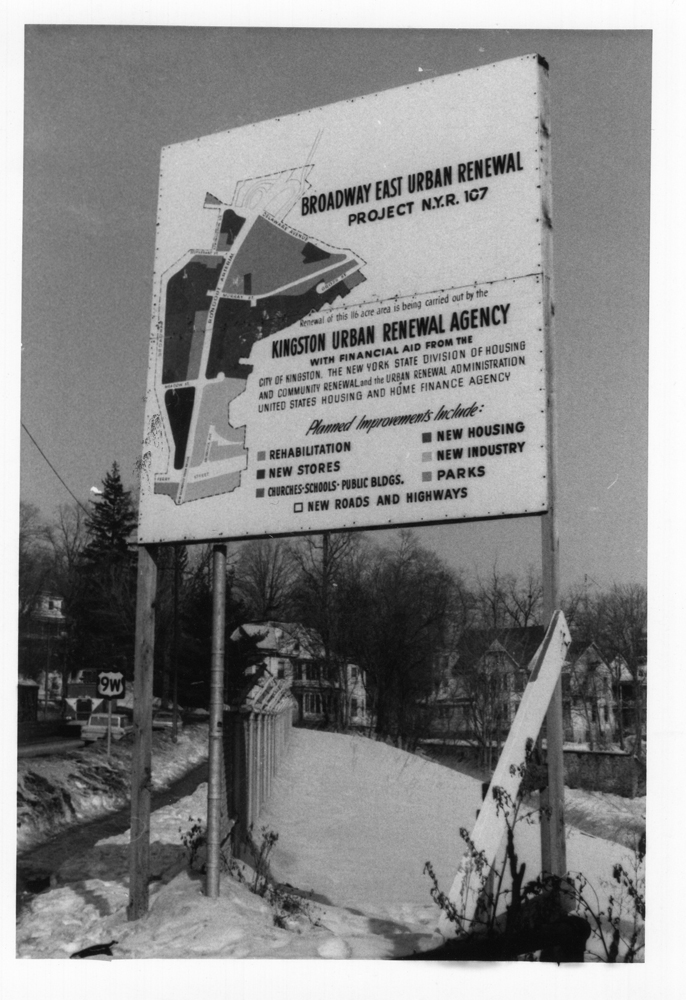
A sign promoting the Broadway East project in Kingston.
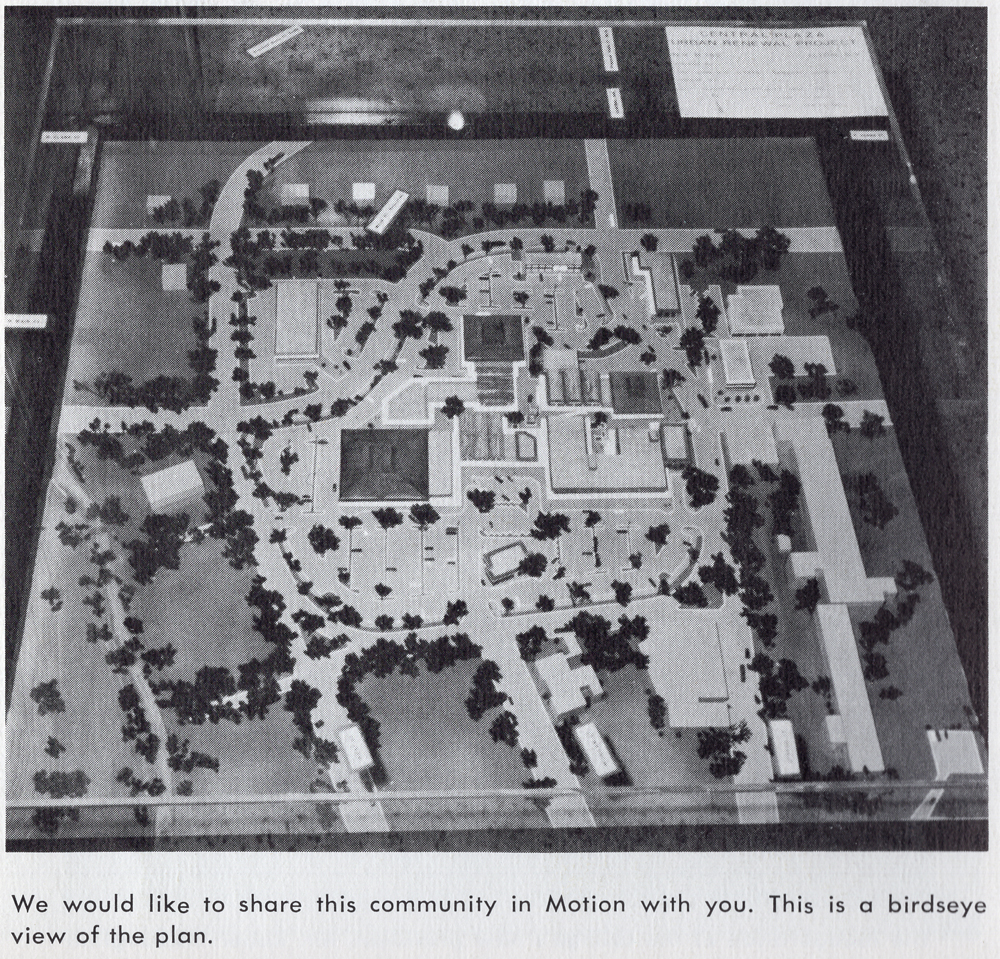
A page from a brochure promoting urban renewal in Ilion.
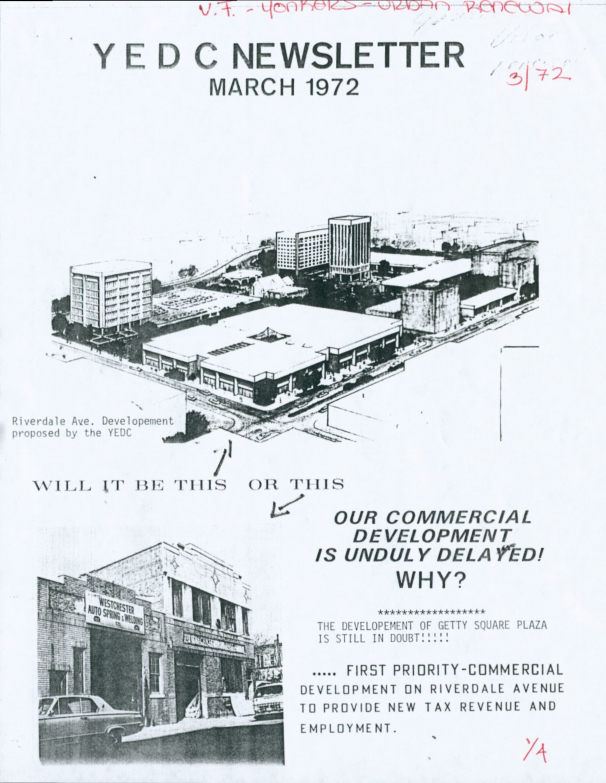
This 1972 Yonkers Economic Development Corp. pamphlet dramatically laid out the stakes for renewal.
Courtesy of Yonkers Public Library
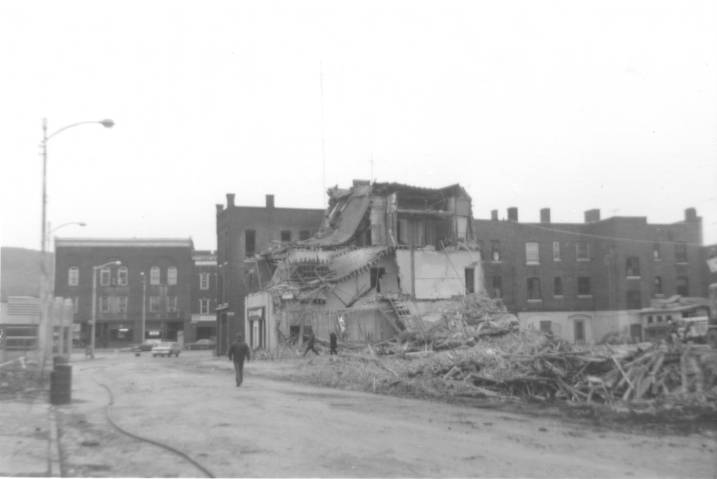
View of Ilion's Union Street Looking North During Urban Renewal. The buildings on Union Street were razed to make way for a parking lot in the new Central Plaza.
Courtesy of Ilion Free Public Library
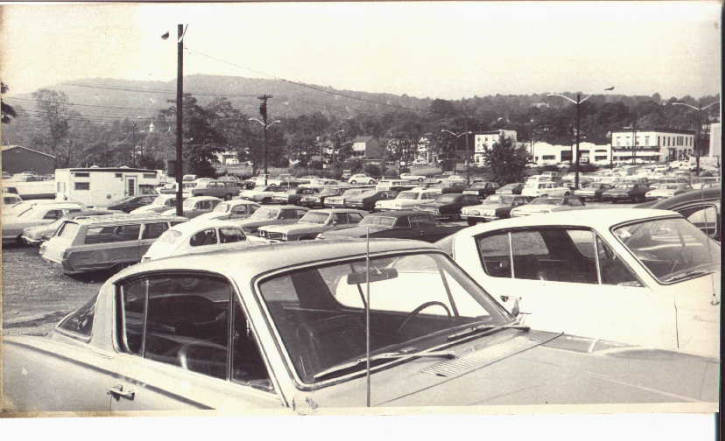
Looking west from the corner of Main and Cedar Streets in Nyack, the area cleared for Urban Renewal has become a huge parking lot. Dozens of buildings were demolished and hundreds of people were displaced to create this space.
Courtesy of Nyack Public Library
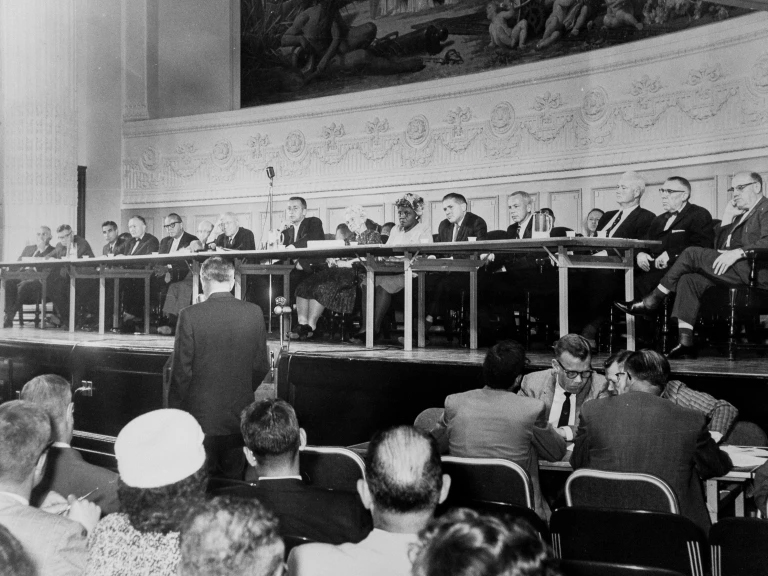
Public hearing to determine whether to build a new state capitol complex in downtown Albany, Oct. 1961.
Courtesy of the Records of the Temporary Commission on the Capital City, New York State Archives