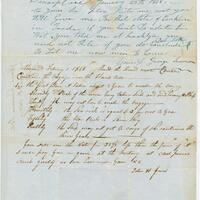
Whaling first became a major economic enterprise on Long Island near the end of the seventeenth century. The industry rapidly grew in economic importance; whale oil fueled the early industrial revolution, it brought together indigenous, African American, and European labor and knowledge, making whaling the first integrated industry in the United States; and the pursuit of whales let to technological innovation and the discovery and exploration of new waters, lands, and peoples during the early years. While American Whaling was in a slow decline by the mid nineteenth century, a new phase of industrial whaling continued into the nineteenth century until most countries banned whaling in the 1970s.
With a few exceptions, the majority of the illustrations in this collection depict an earlier age when American whalers sailed the seas in wooden ships and canvas sails, relying on hand-propelled harpoons or early bomb lances. In its heyday, whaling was an incredibly lucrative business for its investors, but not so much for the whalers themselves who risked their lives for little pay. Whaling was a victim of its own success; it created more opportunities on land than out at sea as the industrial revolution took off. Until the discovery of oil on land, in Titusville, Pennsylvania in 1859, whales supplied many of the oils and raw materials for lighting and mechanical lubrication. Other blows to whaling include declining populations of over-hunted whale species, the Gold Rush, changing fashions no longer requiring whale baleen, the Civil War, and a series of devastating losses in the Arctic that significantly diminished the American whaling fleet.
While whaling dwindled in the United States, it continued globally into the twentieth century with better ships, sonar and navigation technology, helicopters, and improved bomb lances. Our collective fondness and fascination with whales is a relatively new phenomenon thanks to the work of scientists and activists in the later twentieth century, but that is beyond the scope of this collection. Today, whale populations are recovering around the world. Many species are still endangered because of human and environmental factors, but many are also recovering from the stresses that industrial whaling had put on them.